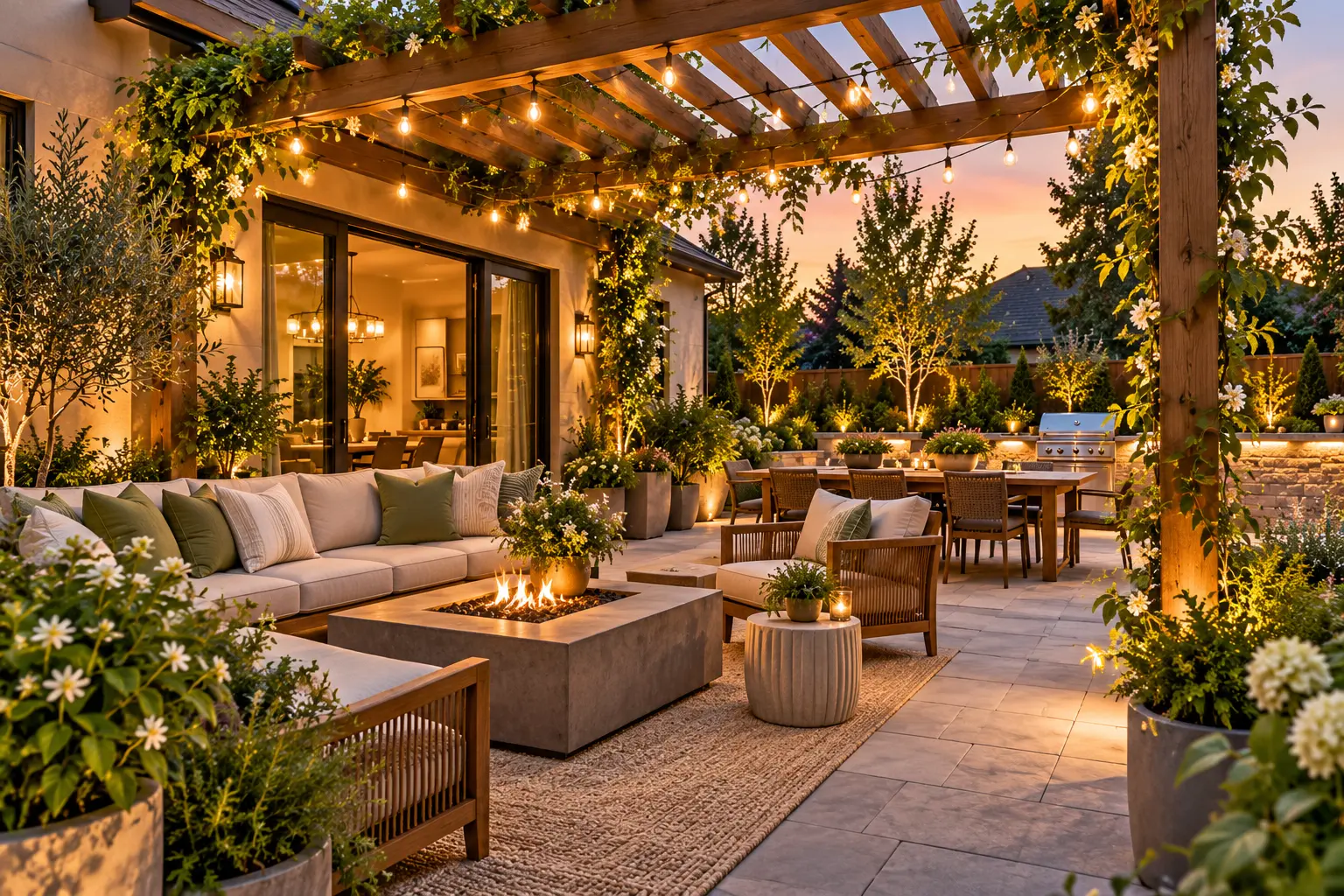
A beautiful patio can completely change how you use your backyard. Whether you want a peaceful place to enjoy your morning coffee, an inviting space for family dinners, or a comfortable spot to entertain friends, the right patio design can make your outdoor space feel like an extension of your home.
And creating an inviting patio doesn’t necessarily require a large backyard or an expensive renovation. Thoughtful furniture placement, attractive materials, comfortable lighting, and a few well-chosen plants can make even a modest patio feel special.
From cozy garden retreats to modern entertaining spaces, these 12 patio ideas offer inspiration for different backyard sizes, design styles, and budgets.
Table of Contents
1. Create a Cozy Patio Lounge
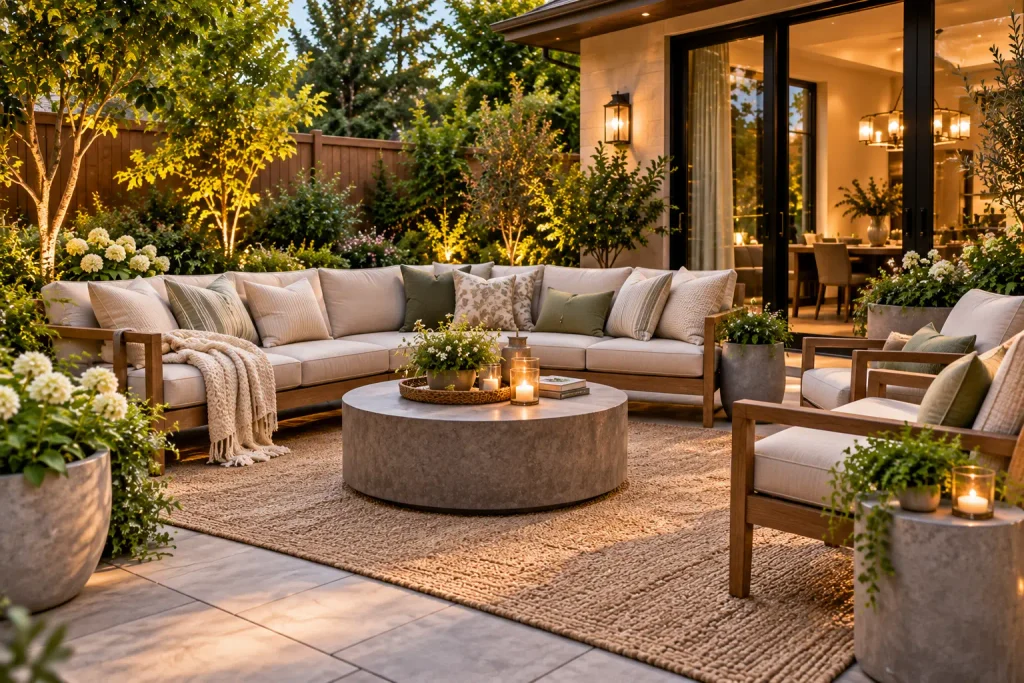
One of the simplest ways to make a patio more inviting is to arrange it like an outdoor living room.
Start with a comfortable outdoor sofa or a pair of lounge chairs. Add a weather-resistant coffee table, outdoor cushions, and a rug to help define the seating area.
The key is to arrange furniture around a central point rather than placing everything against the edges of the patio. This encourages conversation and makes the space feel intentional.
Design tips:
- Choose furniture with proportions that suit your patio.
- Use an outdoor rug to visually anchor the seating area.
- Mix cushions and textures for a comfortable, layered appearance.
- Leave enough room to walk comfortably around the furniture.
Best for: Medium-sized patios, family gathering spaces, and homeowners who enjoy relaxing outdoors.
2. Add a Pergola for Shade and Style
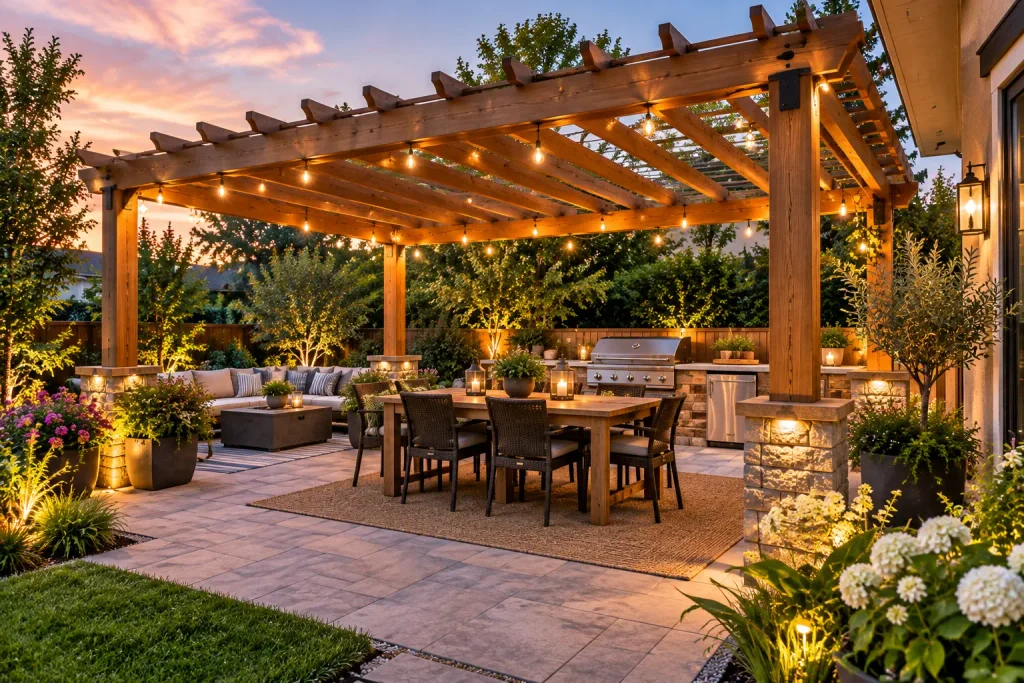
A pergola can turn an ordinary patio into a defined outdoor destination.
Its overhead beams create architectural interest while providing a framework for shade sails, retractable canopies, climbing plants, or outdoor lighting.
Wood pergolas bring warmth and a natural appearance, while aluminum and steel designs can complement modern homes.
For a particularly inviting look, position a dining table or lounge seating beneath the pergola and add warm string lights overhead.
Keep in mind that traditional open-roof pergolas provide partial shade rather than complete protection from the sun or rain.
Design tips:
- Match the pergola’s scale to the patio and surrounding house.
- Consider the sun’s direction before deciding on placement.
- Add a retractable canopy if adjustable shade is important.
- Check local building requirements before installing a permanent structure.
Best for: Sunny backyards, outdoor dining areas, and patios that need a stronger architectural focal point.
3. Design a Small Bistro Patio
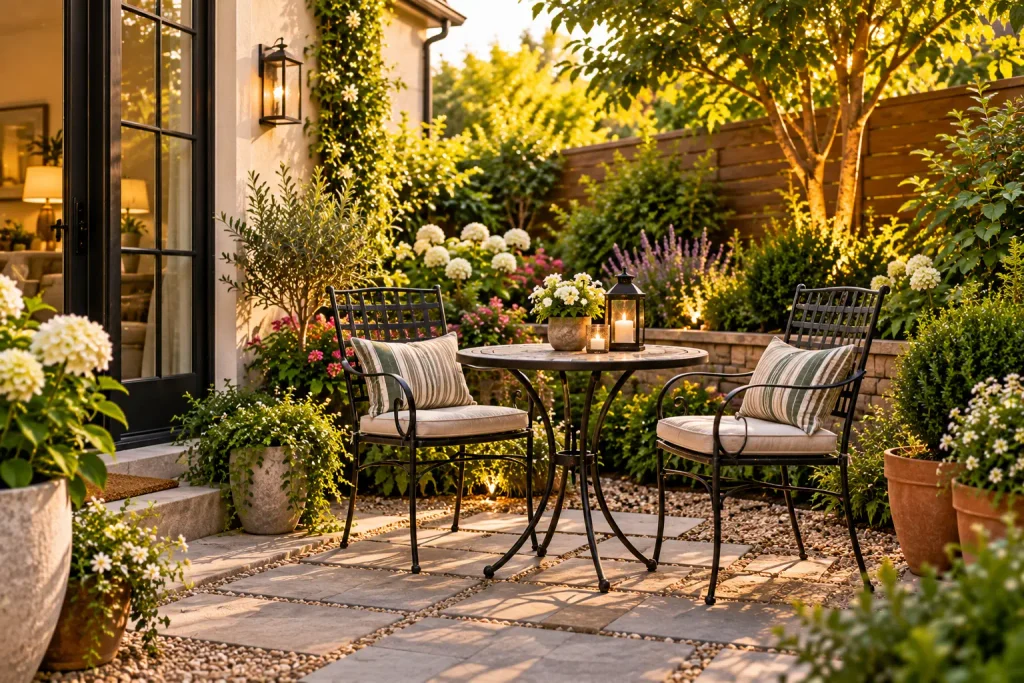
You don’t need a large outdoor space to create a charming place to sit and relax.
A bistro patio uses a small table and two chairs to establish a comfortable destination for coffee, breakfast, or an evening conversation.
This design works particularly well in a quiet backyard corner, beside a garden, or just outside a kitchen door.
A compact round table can make movement easier in tight spaces, while folding chairs provide flexibility when the patio isn’t being used.
Surround the seating area with planters, fragrant herbs, or flowering plants to make it feel like a small garden retreat.
Design tips:
- Use a round table to soften the appearance of a compact space.
- Choose lightweight or folding furniture when space is limited.
- Add container plants for privacy and visual interest.
- Include a small lantern or wall-mounted light for evening use.
Best for: Small backyards, narrow patios, and intimate seating areas.
Working with a smaller outdoor space? Explore our 25 Small Backyard Ideas for more creative ways to make the most of a compact yard.
4. Build a Patio Around a Fire Pit
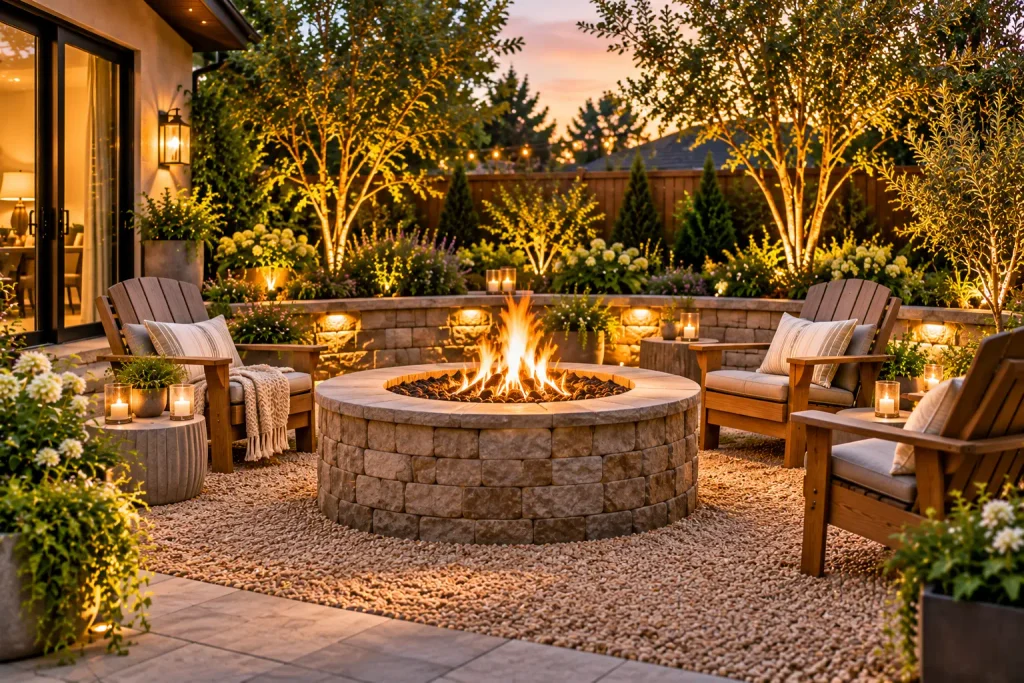
A fire pit creates a natural gathering place and makes a patio more appealing during cooler evenings.
For a casual atmosphere, arrange outdoor chairs in a circle around a freestanding fire pit. For a more polished design, consider a built-in fire feature surrounded by comfortable seating.
The materials you choose can dramatically change the style. Natural stone creates a rustic appearance, while concrete and metal designs often feel more contemporary.
Safety should guide the layout. Fire features need appropriate clearances from furniture, structures, vegetation, and combustible surfaces. Always follow the manufacturer’s instructions and applicable local fire regulations.
Design tips:
- Choose seating that allows people to move comfortably around the fire feature.
- Coordinate the fire pit material with the patio surface.
- Consider a gas fire feature if convenience is a priority.
- Avoid placing fire features beneath low overhead structures or near combustible materials.
Best for: Social gathering spaces, cooler climates, and homeowners who enjoy spending evenings outdoors.
5. Use Large Pavers for a Modern Patio
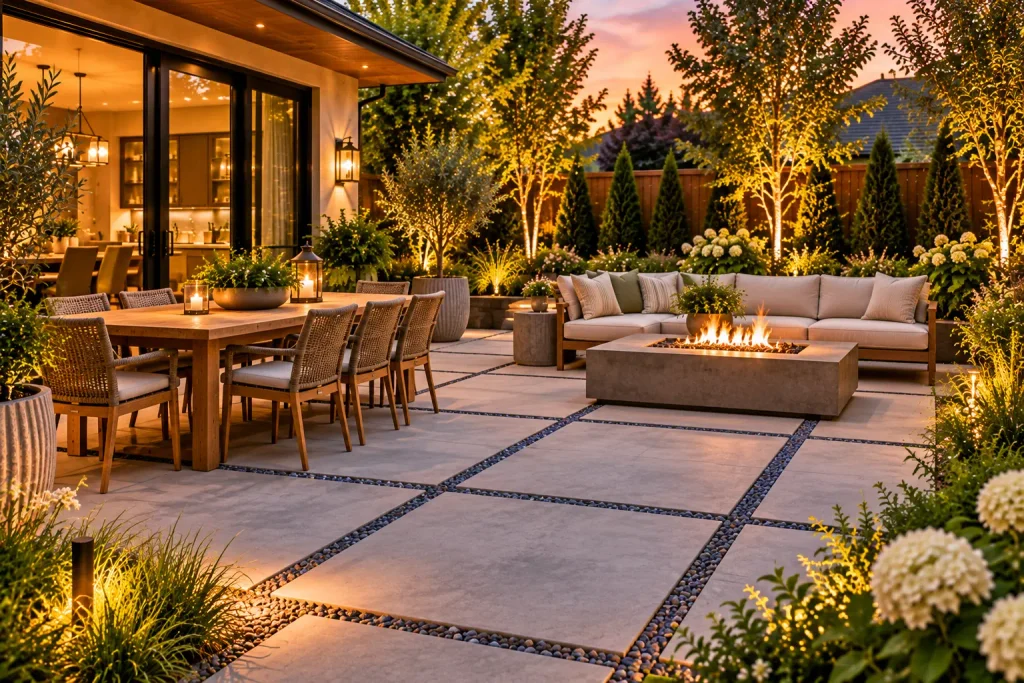
Large-format pavers can give a patio a clean, contemporary appearance.
Their broad surfaces and fewer visible joints create a sense of openness, which can be especially attractive in smaller yards.
Concrete and porcelain pavers are popular options for modern designs. Neutral colors such as warm gray, sand, cream, and charcoal work well with simple outdoor furniture and architectural landscaping.
For a softer appearance, combine the pavers with ornamental grasses, raised planting beds, or natural wood accents.
A properly prepared base and suitable drainage are essential for a durable installation. Some porcelain paving products require installation methods different from conventional concrete pavers.
Design tips:
- Use a consistent paver size for a streamlined appearance.
- Coordinate the paving color with your home’s exterior.
- Add plants to balance hard surfaces with greenery.
- Choose a slip-resistant finish suitable for outdoor use.
Best for: Contemporary homes, minimalist landscapes, and patios that benefit from a clean visual style.
6. Create an Outdoor Dining Room
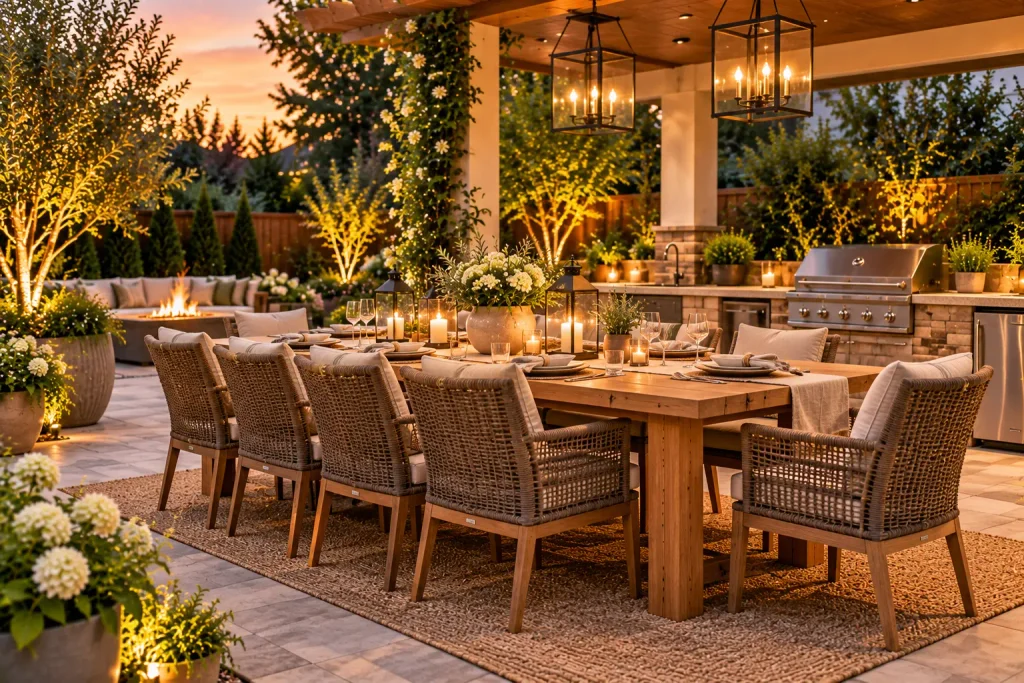
A dedicated outdoor dining area can make backyard meals feel like a special occasion.
Start with a table sized for your household and the number of guests you regularly entertain. Then consider shade, lighting, and how easily people can move between the patio and kitchen.
A dining patio near the house can be particularly convenient for carrying food, dishes, and drinks.
To make the area feel more like a room, use a pergola, large umbrella, or overhead lighting to define the space.
A nearby serving cart or small storage cabinet can make outdoor meals more convenient without requiring a full outdoor kitchen.
Design tips:
- Allow room for chairs to pull out without blocking walkways.
- Position the dining area near an accessible route from the kitchen.
- Use shade to make daytime meals more comfortable.
- Choose easy-to-clean, weather-resistant dining furniture.
Best for: Families, frequent entertainers, and homeowners who enjoy dining outside.
7. Surround Your Patio With Lush Landscaping
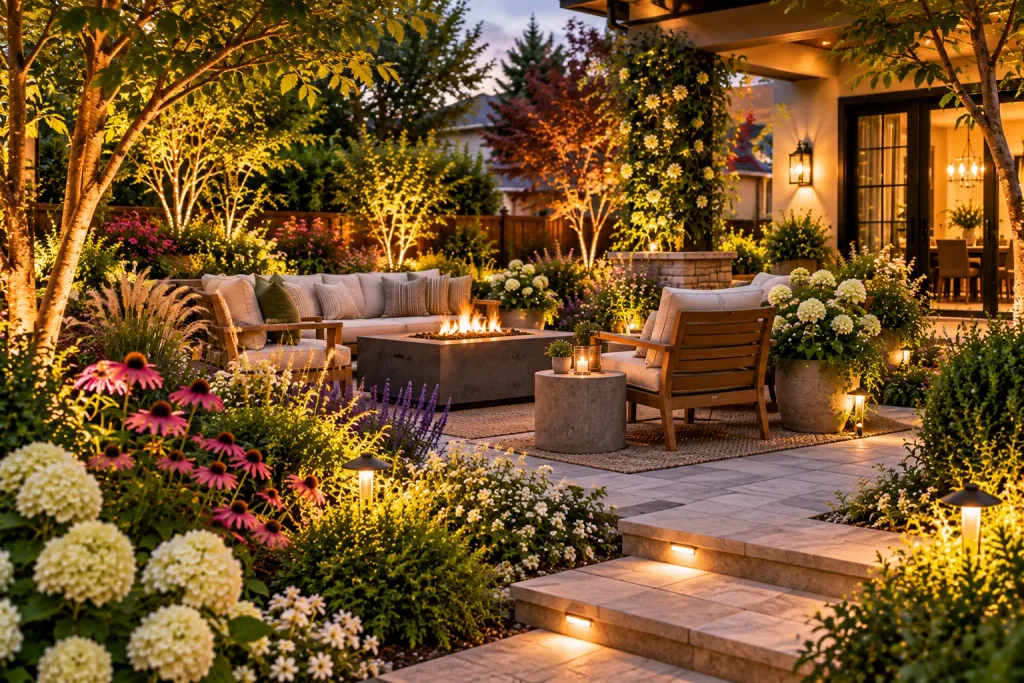
Sometimes the most beautiful patio designs are the ones that feel connected to the garden.
Rather than separating the patio from the surrounding landscape, use planting beds, shrubs, and ornamental grasses to soften its edges.
Layering plants at different heights can create a sense of enclosure and privacy without making the space feel closed in.
For example, low flowering plants can border the paving, medium-height grasses can add movement, and taller shrubs can provide a green backdrop.
Choose plants appropriate for your climate, sun exposure, and watering preferences.
Design tips:
- Use curved planting beds to soften a rectangular patio.
- Combine evergreen plants with seasonal flowers.
- Leave sufficient room for plants to reach their mature size.
- Avoid placing aggressive root systems too close to paving.
Best for: Garden lovers, naturalistic landscapes, and patios that need more privacy or softness.
8. Make a Gravel Patio Feel Intentional
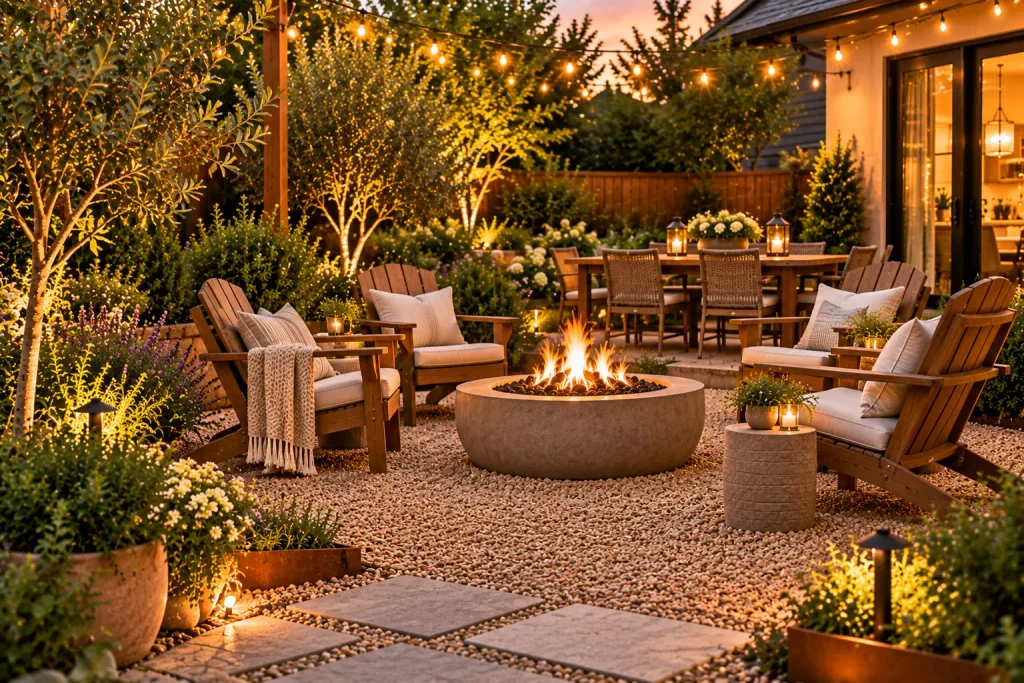
A gravel patio can be an attractive alternative to a conventional paved surface, particularly for informal seating areas and garden retreats.
Pea gravel, crushed stone, and decomposed granite each create a different appearance and walking experience.
The secret to a successful gravel patio is giving it a clearly defined shape. Edging, planting beds, stepping stones, or a low border can make the space feel designed rather than unfinished.
Choose a material and installation method that provide a stable surface for your intended furniture and foot traffic. Loose rounded gravel can make chairs difficult to move and may not be suitable for accessible routes.
Design tips:
- Install appropriate edging to keep gravel contained.
- Use a compacted, well-prepared base where required.
- Consider angular, compactable materials for greater stability.
- Pair the patio with simple wood or metal furniture.
Best for: Informal garden seating, cottage-style backyards, and projects where a traditional paved patio isn’t necessary.
9. Add Privacy With Screens and Planters
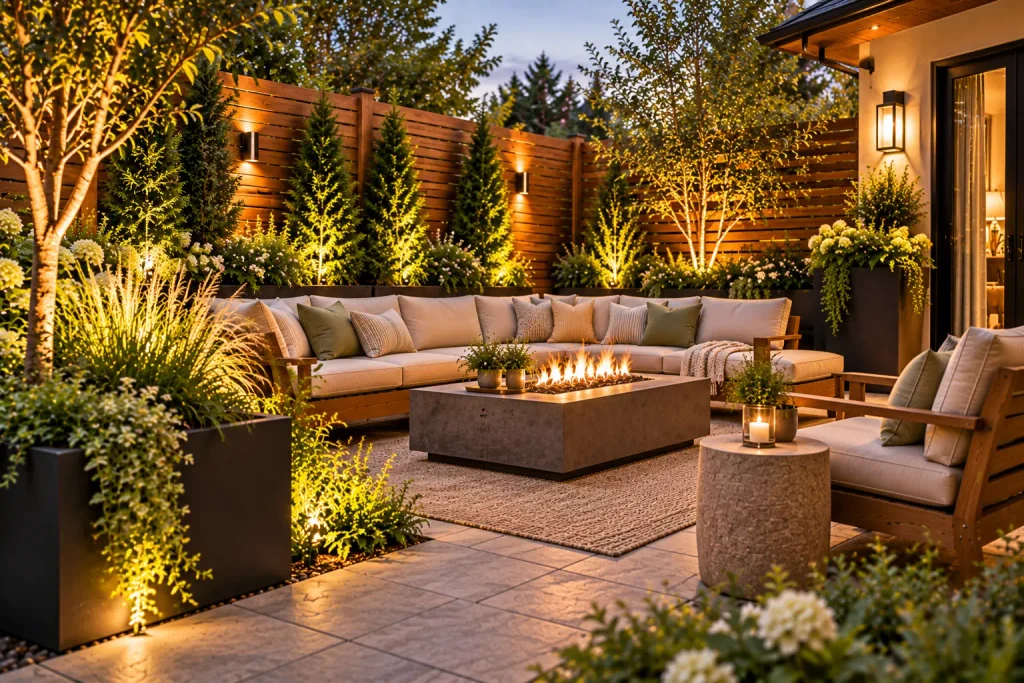
A patio feels more relaxing when it offers a little separation from neighboring properties or busy areas.
Privacy doesn’t always require building a tall fence. Decorative screens, trellises, tall planters, and carefully positioned shrubs can create a sense of enclosure.
Wood slat screens are especially versatile because they can provide partial screening while still allowing light and air to pass through.
For a softer look, use climbing plants on a trellis or group tall containers around one side of the patio.
Before adding screens or structures, consider wind exposure, stability, property boundaries, and local height restrictions.
Design tips:
- Screen the specific sightlines that affect privacy rather than enclosing the entire patio.
- Combine solid materials with greenery.
- Choose weather-resistant materials suited to your climate.
- Keep pathways and exits unobstructed.
Best for: Suburban backyards, patios near neighboring windows, and outdoor relaxation spaces.
10. Create a Warm Atmosphere With Layered Lighting
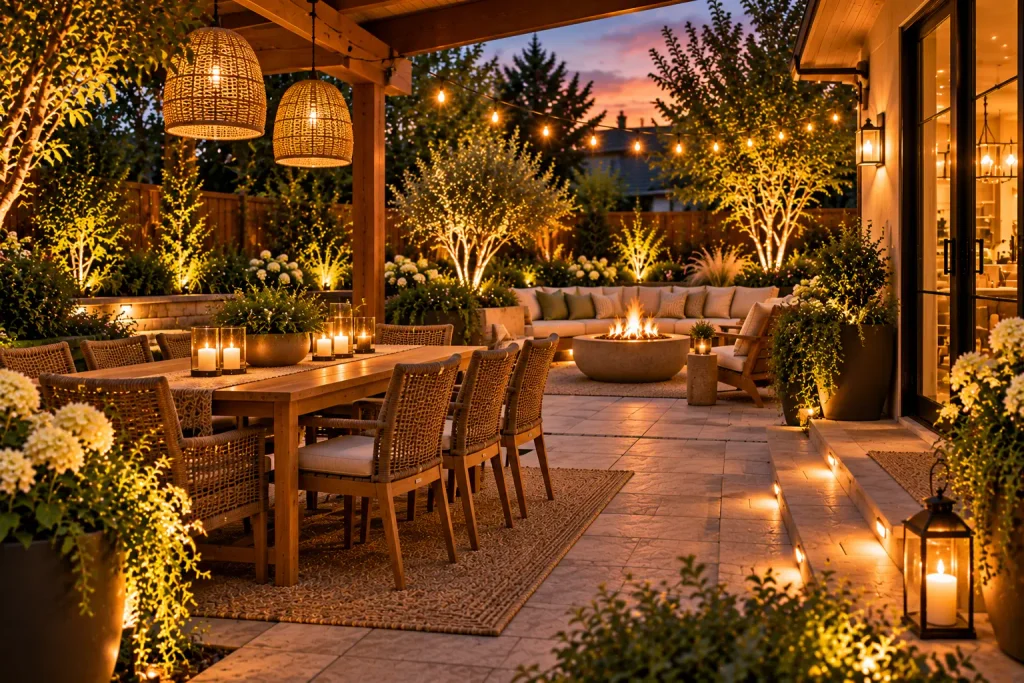
Outdoor lighting can transform a patio after sunset.
Instead of relying on one bright fixture, combine several types of lighting to create a comfortable atmosphere.
String lights can add a welcoming glow above a dining or lounge area. Wall sconces can illuminate the space near the house, while subtle landscape lights can highlight plants or architectural details.
Portable, rechargeable outdoor lamps are another flexible option, especially for patios without convenient electrical outlets.
The goal is to provide enough light for comfort and safety without making the space feel harsh or overly bright.
Design tips:
- Choose warm-toned lighting for a relaxed atmosphere.
- Use separate lighting for dining, pathways, and decorative features.
- Avoid directing bright lights toward neighboring properties.
- Use outdoor-rated fixtures and have permanent wiring installed appropriately.
Best for: Almost any patio, particularly spaces used for evening dining or entertaining.
11. Add an Outdoor Kitchen or Grilling Station
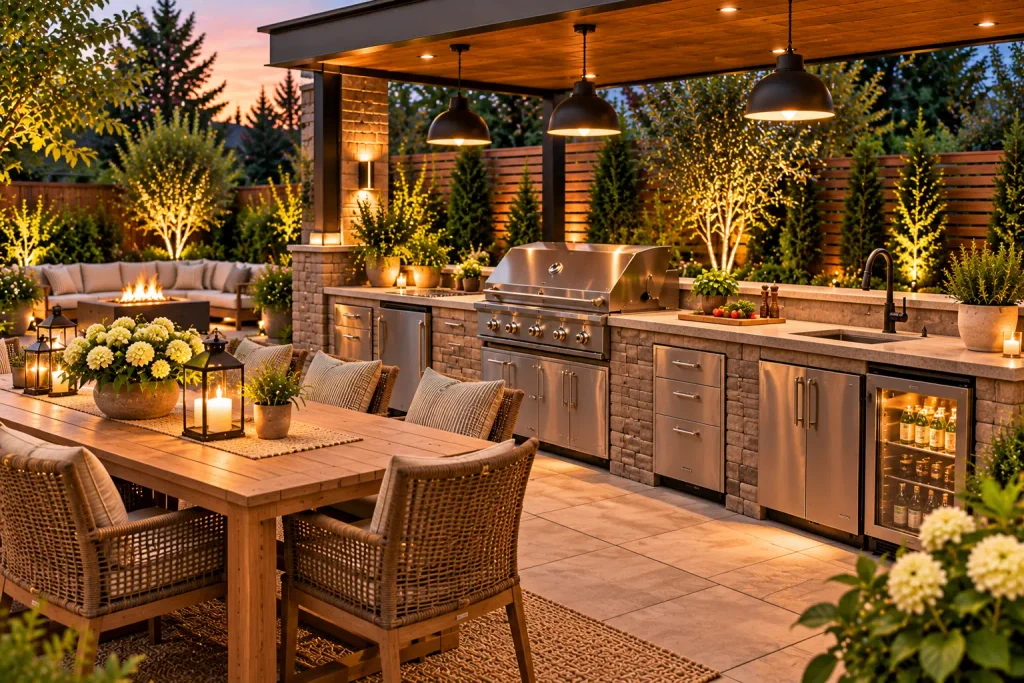
For homeowners who love cooking and entertaining, a dedicated grilling area can make a patio much more functional.
You don’t need a fully equipped outdoor kitchen to enjoy the benefits. A grill, a weather-resistant preparation surface, and nearby storage can provide a convenient cooking station.
Larger patios may accommodate built-in counters, a sink, or additional appliances.
Think carefully about the relationship between the cooking area and the dining space. Keeping them reasonably close makes serving easier, while leaving appropriate circulation space helps prevent crowding.
Follow appliance clearance requirements, ventilation guidance, and local codes. Grills and outdoor cooking equipment should never be used in enclosed or poorly ventilated areas.
Design tips:
- Prioritize preparation space before adding extra appliances.
- Choose countertop materials designed for outdoor exposure.
- Keep combustible materials away from cooking equipment.
- Plan for safe utility connections if adding gas, water, or electricity.
Best for: Frequent entertainers, outdoor cooking enthusiasts, and medium to large patios.
12. Design a Multi-Zone Patio
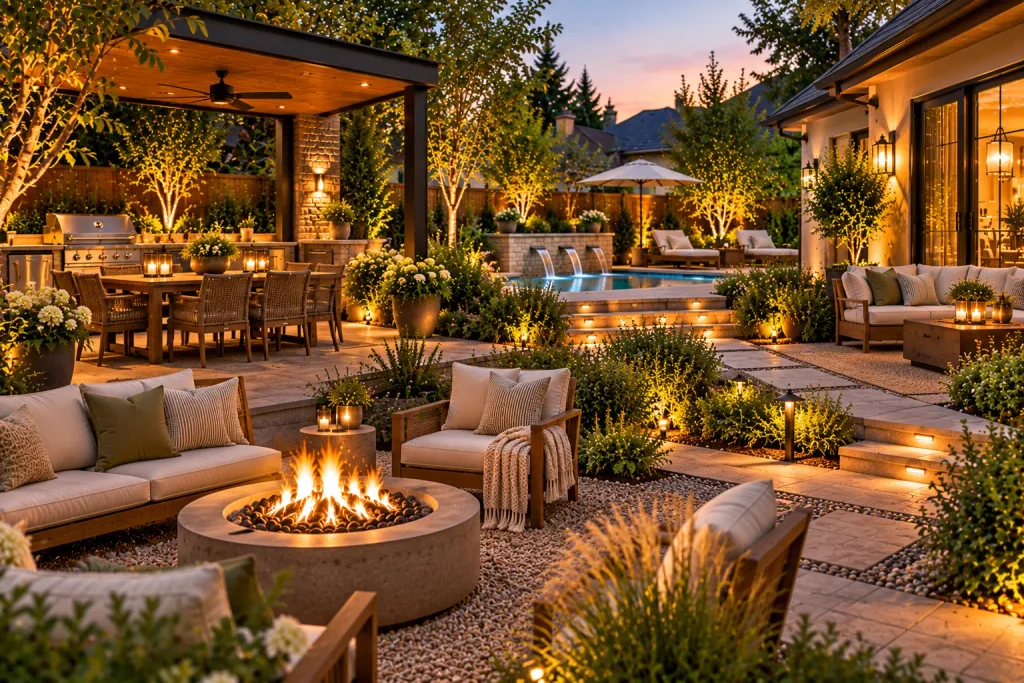
If your backyard has enough room, dividing the patio into distinct activity areas can make it more versatile.
For example, one section might contain an outdoor dining table, while another offers lounge seating. A third area could accommodate a small grilling station or a quiet reading chair.
The trick is to make each zone feel connected while giving it a clear purpose.
You can define different areas through furniture arrangement, rugs, planters, changes in paving patterns, or overhead structures.
Even a relatively compact patio can sometimes support two distinct functions when furniture is carefully scaled.
Design tips:
- Identify the activities you use your backyard for most often.
- Arrange zones to minimize unnecessary foot traffic through seating areas.
- Repeat materials or colors to create a cohesive appearance.
- Avoid overcrowding the patio with too many features.
Best for: Larger patios, family backyards, and homeowners who want their outdoor space to serve several purposes.
How to Choose the Right Patio Design for Your Backyard
With so many possibilities, choosing a patio design can feel overwhelming. The best approach is to begin with how you want to use the space.
Consider your primary purpose. If relaxation is your priority, comfortable seating and privacy may matter more than a large dining table. If you frequently host guests, circulation space, seating capacity, and convenient food preparation become more important.
Think about your available space. A small patio often benefits from one clearly defined function, while a larger patio may accommodate several activity zones.
Pay attention to sunlight and weather. Shade can be essential in hot climates, while drainage and weather-resistant materials are important wherever rain and seasonal changes affect outdoor living.
Set a realistic budget. Furniture, lighting, and planters can refresh an existing patio, while new paving, pergolas, and built-in kitchens represent larger investments.
Plan for maintenance. Consider how much time you’re willing to spend cleaning surfaces, caring for plants, and maintaining outdoor furniture.
Above all, choose features that support the way you actually live rather than trying to incorporate every appealing idea into one space.
Final Thoughts
A thoughtfully designed patio can become one of the most enjoyable areas of your home.
Whether you prefer a simple bistro table surrounded by greenery, a modern paver patio, or an outdoor entertaining space with a pergola and dining area, the most successful designs combine comfort, function, and personal style.
You don’t have to transform everything at once. Start with the feature that would make the biggest difference in how you use your backyard, then build on it over time.
With the right choices, even a modest patio can become a beautiful and welcoming outdoor retreat.