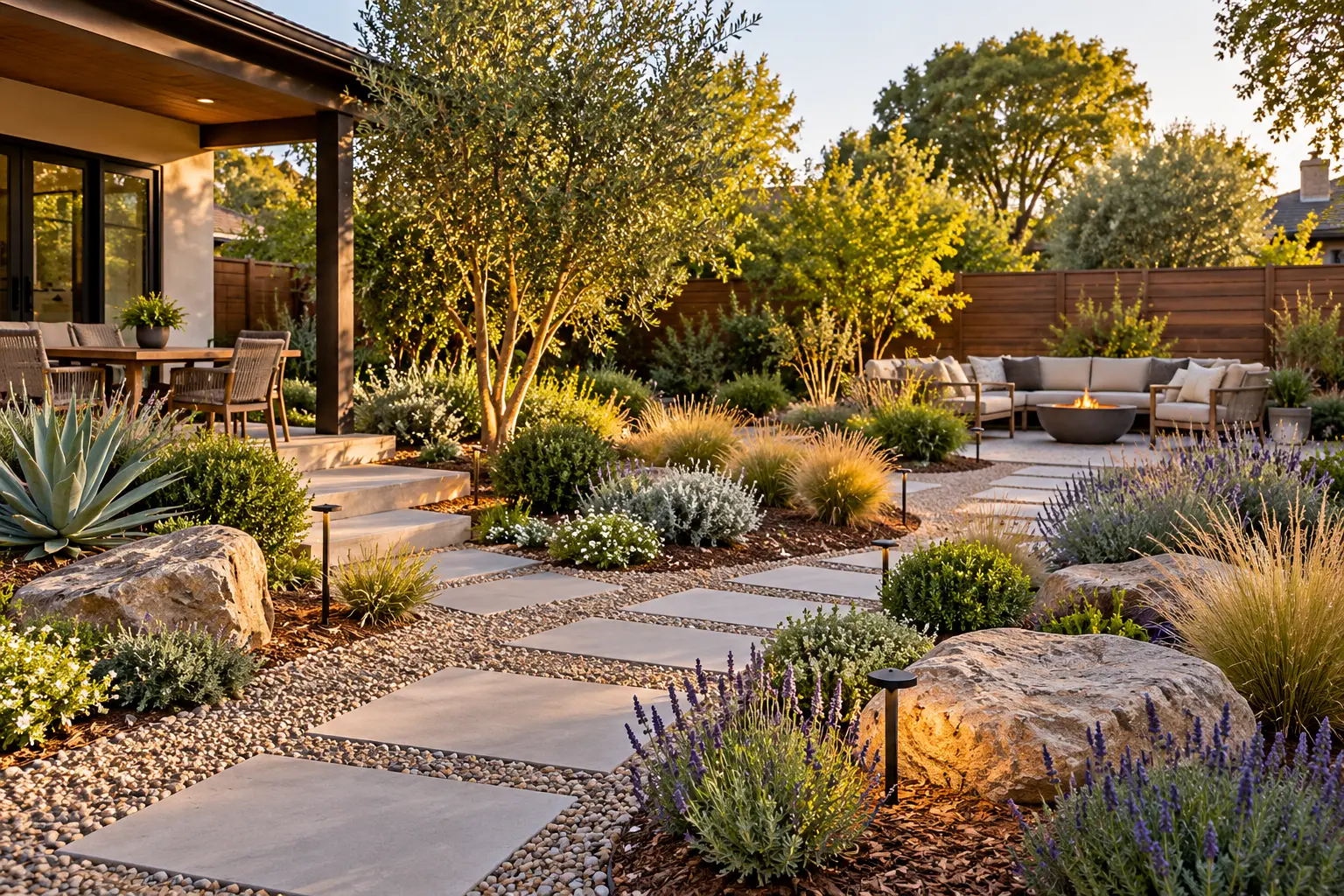
A beautiful backyard shouldn’t require hours of work every weekend. With the right landscaping choices, you can create an inviting outdoor space that looks great throughout the year without constant mowing, watering, pruning, and weeding.
The secret to low-maintenance landscaping isn’t eliminating plants or covering your entire yard with gravel. It’s choosing the right combination of plants, materials, and design features for your climate, available space, and lifestyle.
Whether you’re starting with a blank backyard or looking to simplify an existing landscape, these 12 low maintenance landscaping ideas can help you spend less time working in your yard and more time enjoying it.
Table of Contents
1. Replace High-Maintenance Grass With Ground Covers
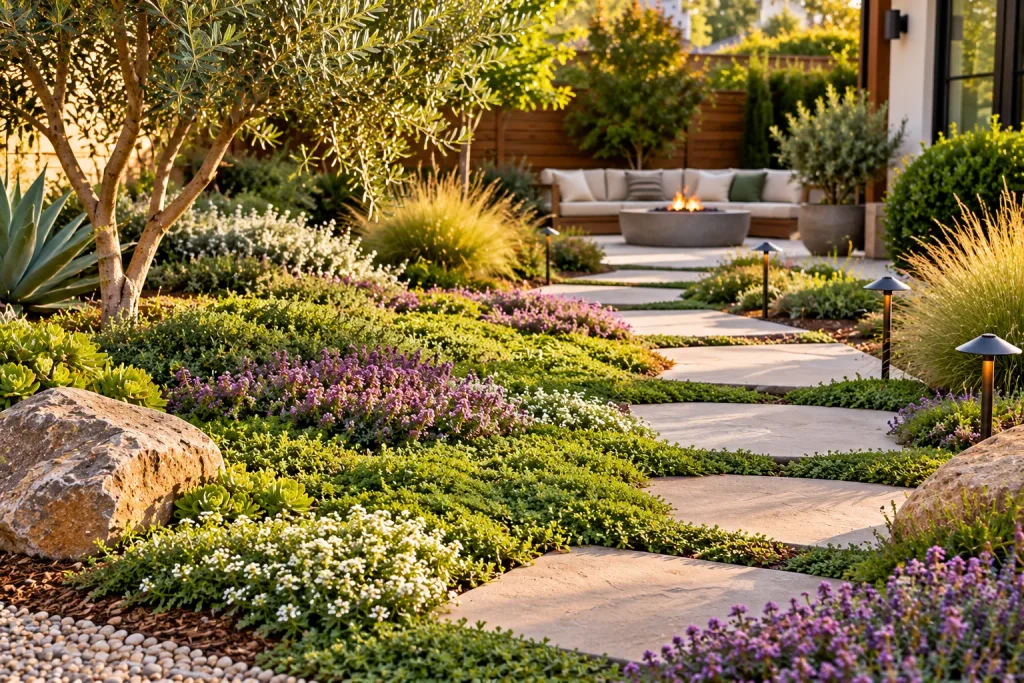
Traditional grass lawns can demand regular mowing, watering, fertilizing, and weed control. Replacing some lawn areas with low-growing ground covers can significantly reduce that workload.
Ground covers create a carpet of greenery without the constant upkeep associated with turf. Depending on your climate and sunlight conditions, options might include creeping thyme, sedum, dwarf mondo grass, or other regionally appropriate plants.
Some ground covers also produce seasonal flowers, adding color and texture to your landscape.
Before planting, consider how you’ll use the area. Many ground covers tolerate occasional foot traffic but aren’t suitable for active play areas or heavily traveled paths.
Best for: Homeowners who want greenery without maintaining a traditional lawn.
Maintenance tip: Choose a ground cover suited to your climate, soil, and sunlight. Most varieties still need watering and weed control while becoming established.
2. Create Attractive Gravel Garden Beds
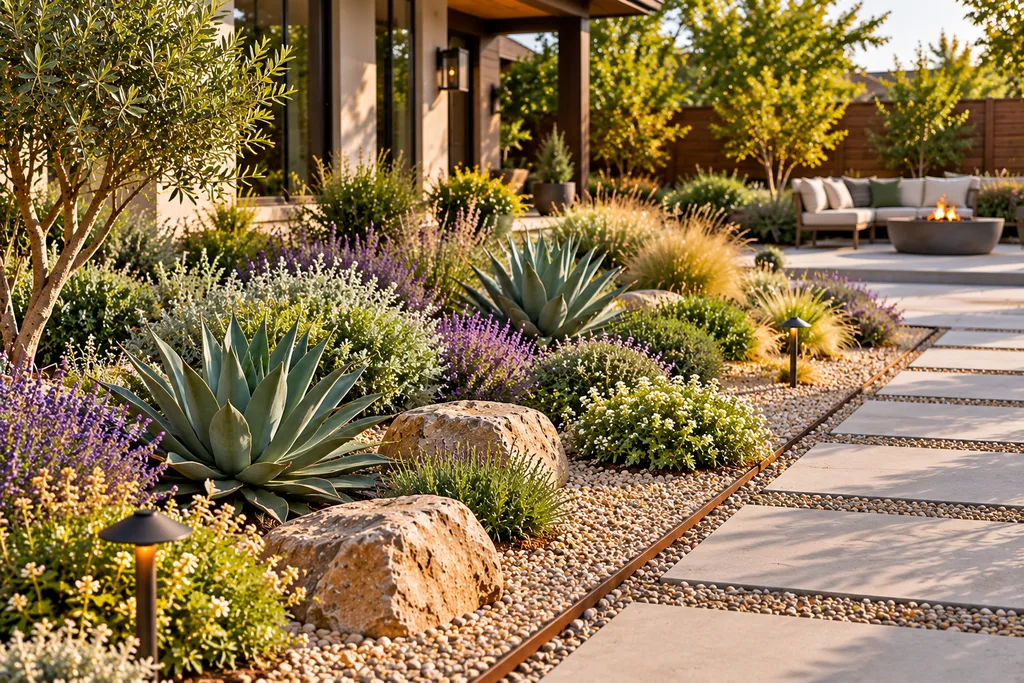
Gravel is a versatile landscaping material that can give your backyard a clean, finished appearance while reducing the amount of grass or densely planted garden space you need to maintain.
It works particularly well around ornamental grasses, drought-tolerant shrubs, and architectural plants. Gravel can also help define planting areas and create attractive transitions between patios, walkways, and gardens.
For a modern look, consider charcoal or gray gravel paired with concrete edging. For a warmer, more natural appearance, use tan or earth-toned gravel alongside native plants.
Gravel isn’t completely maintenance-free. Leaves and debris need occasional removal, and weeds can still grow in accumulated soil or organic material.
Best for: Modern landscapes, dry-climate gardens, and homeowners looking to reduce lawn space.
Maintenance tip: Install appropriate edging to keep gravel contained, and plan for periodic weeding and debris removal.
3. Choose Drought-Tolerant Plants
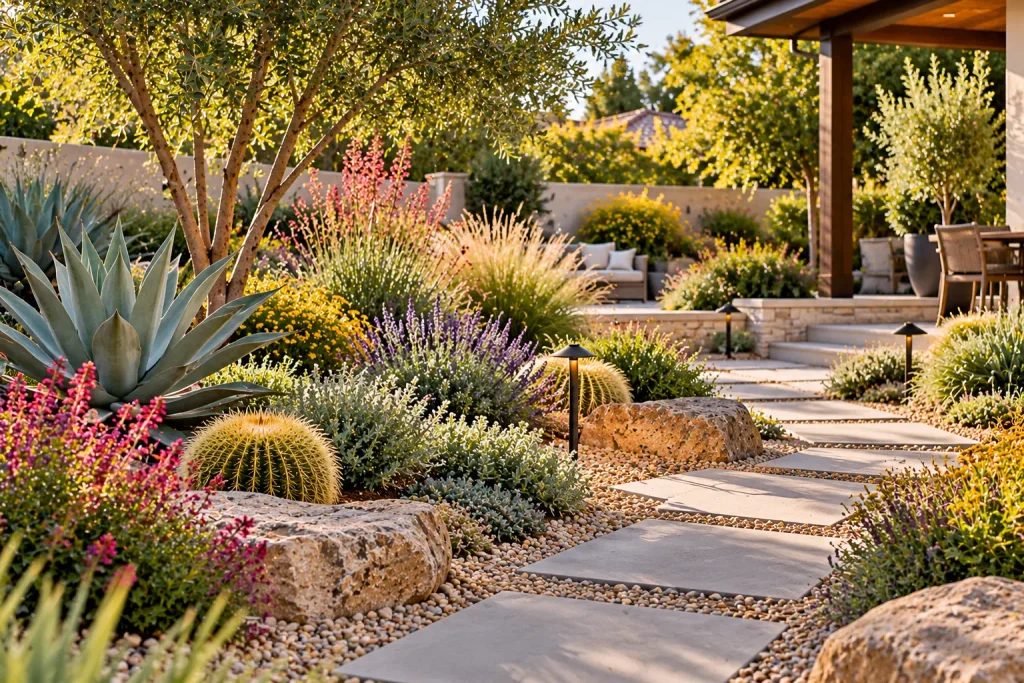
One of the easiest ways to reduce landscape maintenance is to select plants that naturally require less supplemental watering once established.
Drought-tolerant landscaping doesn’t have to look sparse or desert-like. Depending on your region, you can combine flowering perennials, ornamental grasses, shrubs, and succulents to create a lush, layered design.
Plants such as lavender, salvia, sedum, and certain ornamental grasses can work well in suitable climates. In warmer regions, agave and other heat-adapted plants may be good choices.
The key is matching plants to your local conditions rather than assuming every drought-tolerant plant will thrive everywhere.
Best for: Sunny backyards, water-conscious homeowners, and landscapes in areas with seasonal drought.
Maintenance tip: Group plants with similar water requirements together. Even drought-tolerant plants generally need consistent watering during establishment.
4. Use Mulch to Reduce Weeds and Watering
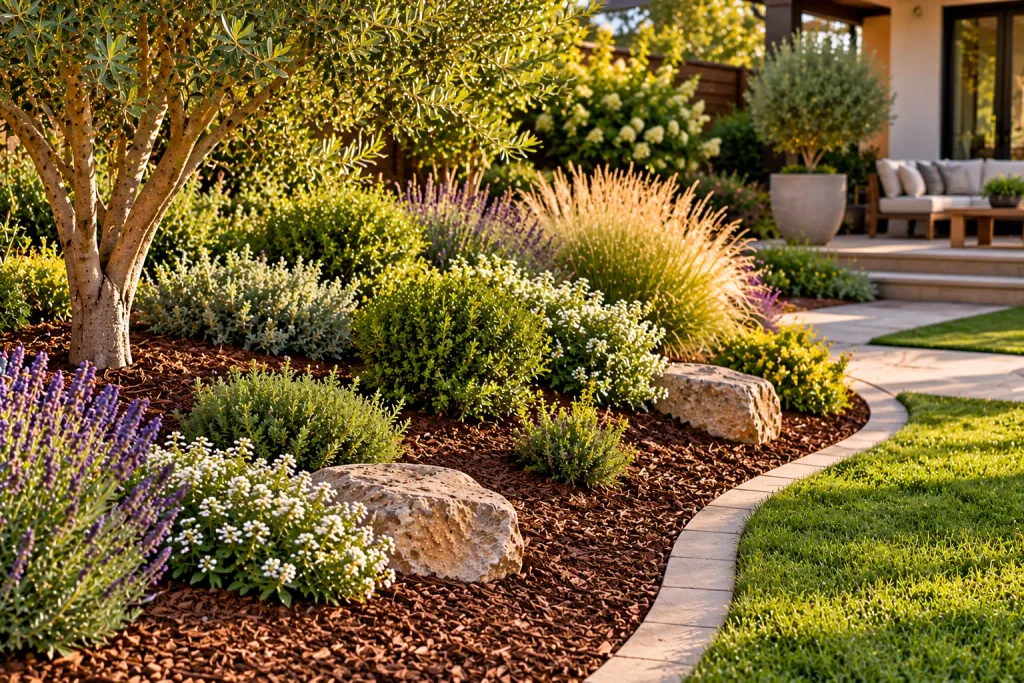
Mulch is one of the simplest and most affordable ways to make planted areas easier to maintain.
A layer of organic mulch helps slow moisture evaporation, moderates soil temperature, and suppresses many weed seedlings. It also gives garden beds a neat, unified appearance.
Shredded bark, wood chips, and other organic mulches work especially well around trees, shrubs, and perennial plantings.
For a polished look, choose one mulch type and use it consistently throughout your landscape.
Keep mulch a few inches away from tree trunks and plant stems to avoid trapping excess moisture against them.
Best for: Flower beds, shrub borders, and landscaped areas around trees.
Maintenance tip: Apply an appropriate mulch depth—often around two to three inches—and replenish it as it breaks down. Avoid piling mulch against trunks or stems.
5. Plant Perennials Instead of Annuals
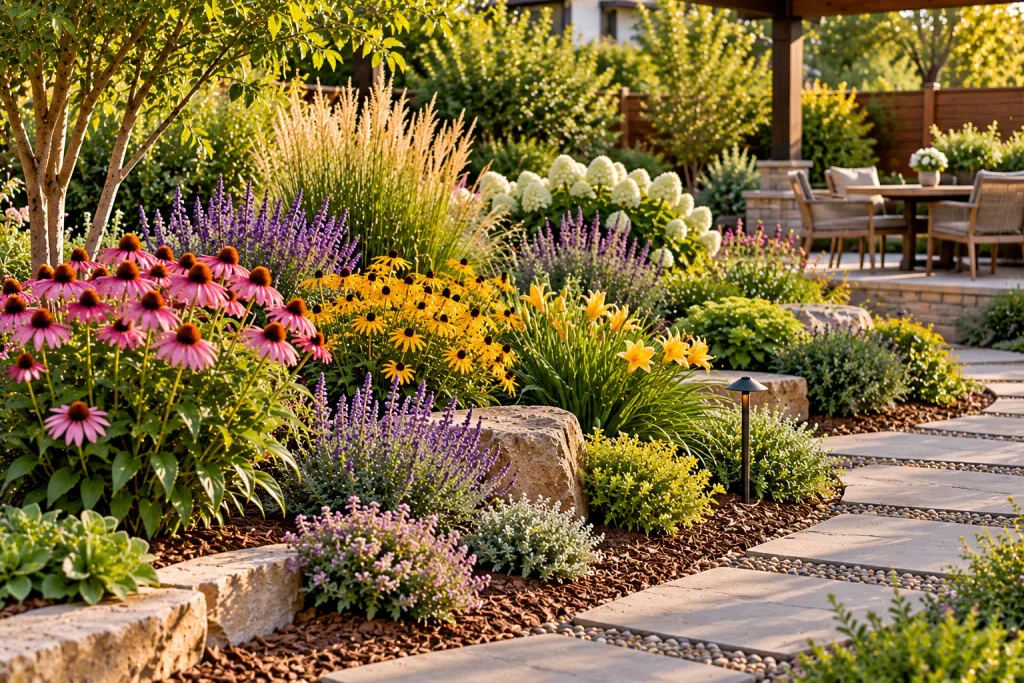
Annual flowers can provide spectacular color, but many need to be replanted each year. Perennials return for multiple growing seasons, making them a practical choice for homeowners who want an attractive garden with less recurring work.
A well-designed perennial bed can offer color and texture throughout the year by combining plants with different bloom times and foliage characteristics.
Depending on your growing region, options may include coneflowers, black-eyed Susans, salvia, daylilies, and ornamental grasses.
Rather than planting dozens of different varieties, repeat a smaller selection of reliable plants. Repetition creates a cohesive design and makes maintenance more predictable.
Best for: Homeowners who want seasonal color without replanting entire flower beds every year.
Maintenance tip: Choose long-lived perennials suited to your growing conditions. Some still need seasonal trimming, dividing, or deadheading.
6. Define Garden Beds With Landscape Edging
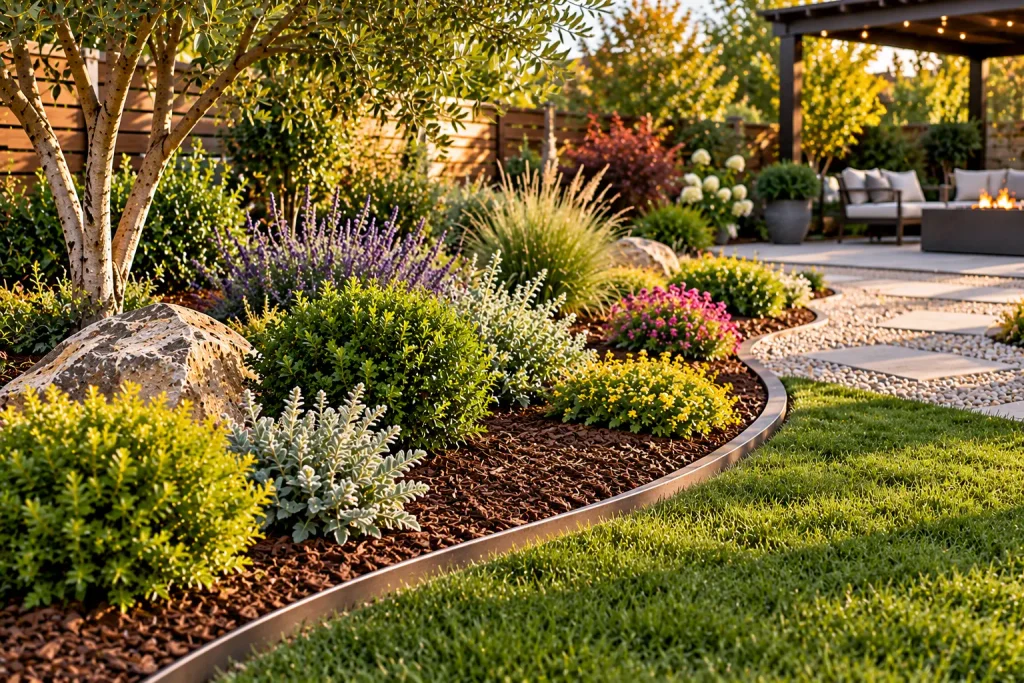
A crisp border between your lawn, garden beds, and walkways can make an entire backyard feel more organized.
Landscape edging also serves a practical purpose. It helps prevent grass from spreading into planting beds and keeps materials such as mulch or gravel where they belong.
Popular edging materials include steel, brick, concrete, stone, and durable landscape pavers.
For a modern backyard, simple metal edging creates clean lines. For a more traditional garden, brick or natural stone can add warmth and character.
Best for: Landscapes with multiple planting areas, gravel beds, or clearly defined lawn borders.
Maintenance tip: Choose edging that’s durable and properly installed. Poorly secured edging can shift over time and create extra maintenance.
7. Add Hardscaping to Reduce Lawn Maintenance
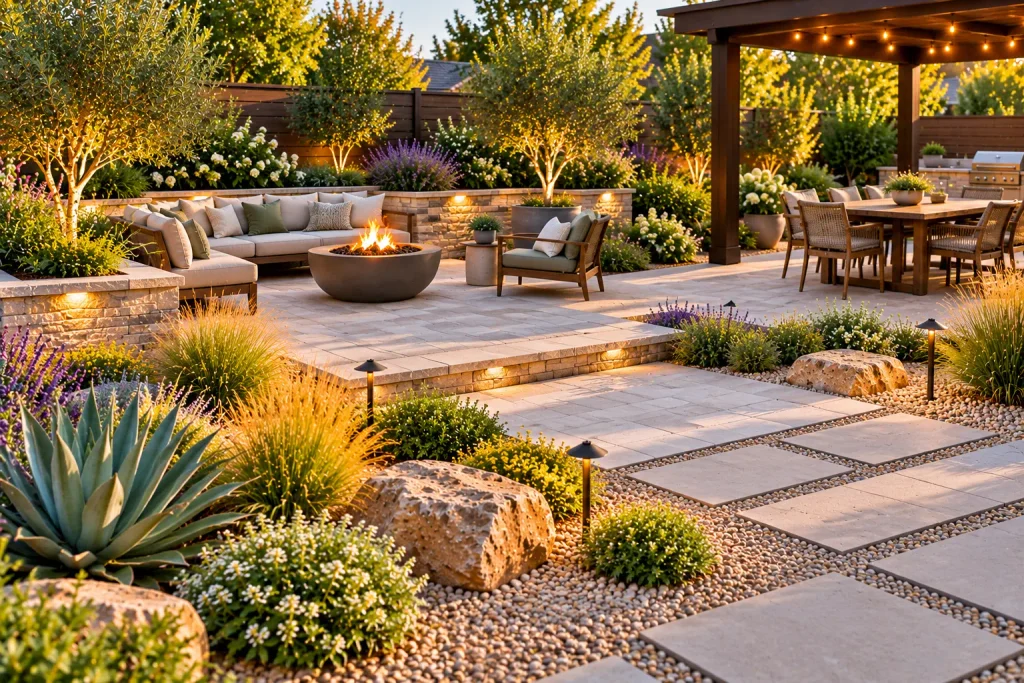
Patios, pathways, seating areas, and other hardscape features can make a backyard more useful while reducing the amount of lawn that requires care.
A small paver patio surrounded by planting beds, for example, can provide an attractive gathering space without needing to mow or water that portion of the yard.
Stepping-stone paths can also help guide foot traffic and prevent worn patches of grass.
The goal isn’t to pave the entire backyard. Combining hardscaping with thoughtfully selected plants creates a balanced outdoor environment that feels inviting rather than overly built-up.
Best for: Homeowners who want more usable outdoor space and less lawn maintenance.
Maintenance tip: Choose materials and installation methods that account for drainage, soil movement, and your local climate. Even hardscapes need occasional cleaning and joint maintenance.
Looking for inspiration for your new outdoor space? Explore our 12 Patio Ideas to Transform Your Outdoor Living Space for creative ways to combine hardscaping with comfortable outdoor living.
8. Install Drip Irrigation
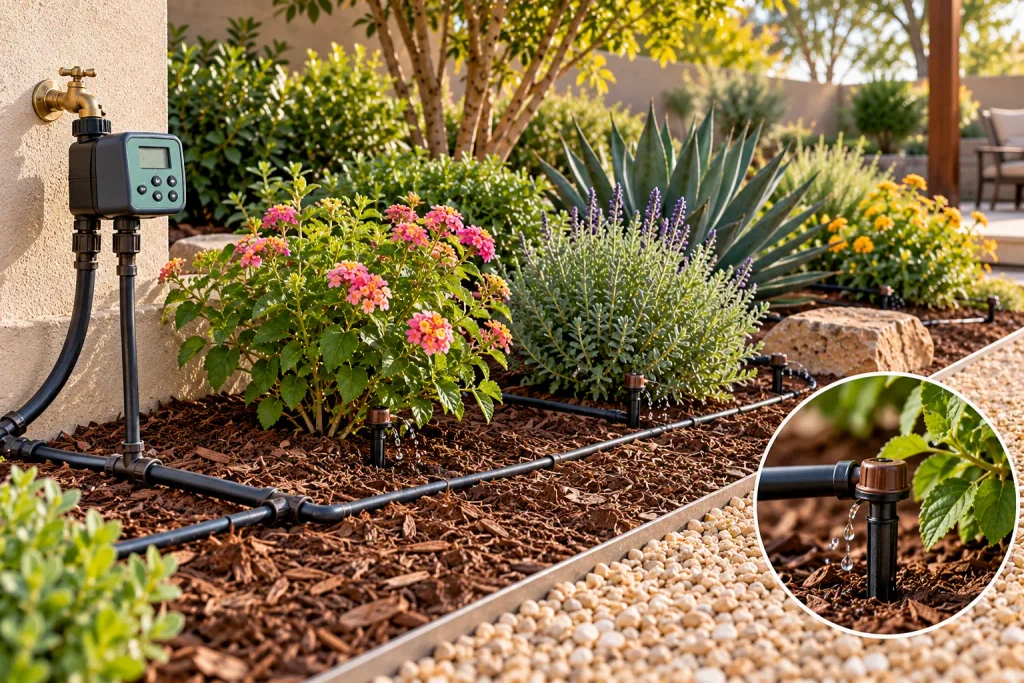
Watering plants by hand can become one of the most time-consuming parts of backyard maintenance, particularly during hot weather.
A drip irrigation system delivers water slowly near plant roots, making it a practical option for shrub borders, garden beds, and many drought-tolerant landscapes.
When paired with a properly configured irrigation controller, drip irrigation can reduce the need for frequent manual watering.
It can also help limit water waste compared with poorly aimed overhead sprinklers.
Drip irrigation isn’t completely hands-off. Emitters can clog, tubing can become damaged, and watering schedules should change with the seasons.
Best for: Planted beds, shrubs, and homeowners who want a more consistent watering routine.
Maintenance tip: Inspect the system periodically and adjust watering based on weather, plant maturity, and soil conditions.
9. Use Native Plants for Easier Landscaping
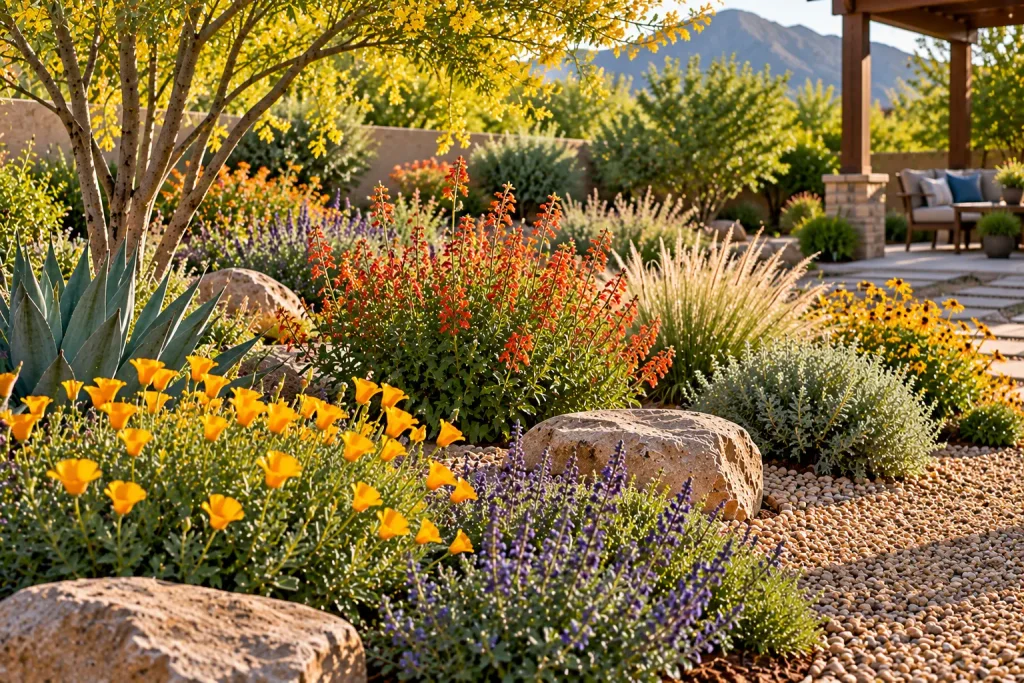
Native plants are species that naturally occur in your region. When placed in appropriate growing conditions, they can be well adapted to local climate patterns and provide valuable habitat for wildlife.
Many native plants require less supplemental watering or intensive care after establishment than poorly suited ornamental varieties.
They can also attract pollinators such as bees and butterflies, bringing additional life and movement to your backyard.
A native landscape doesn’t need to look wild or unstructured. Use repeating plant groups, defined borders, and carefully planned paths to create an intentional design.
Best for: Homeowners interested in sustainable landscaping, pollinator-friendly gardens, and regionally appropriate plants.
Maintenance tip: Select native plants for the specific conditions in your yard. Native doesn’t automatically mean maintenance-free, especially when a plant is placed in unsuitable soil, moisture, or sunlight.
10. Create a Low-Maintenance Rock Garden
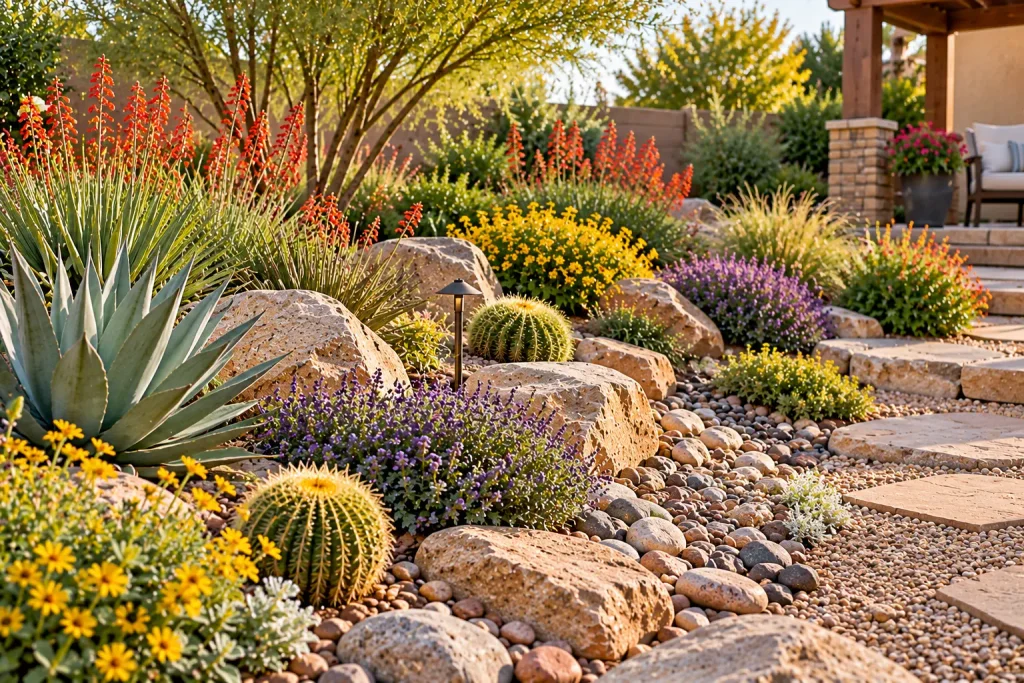
Rock gardens combine stones, boulders, gravel, and carefully selected plants to create landscapes with strong visual interest and relatively modest upkeep.
They work especially well in sunny areas, slopes, and locations where maintaining a traditional lawn would be difficult.
A successful rock garden uses variation in stone size and natural-looking placement. Large boulders can serve as focal points, while smaller stones and gravel help connect the overall design.
Add plants suited to the site, such as sedum, creeping thyme, ornamental grasses, or other locally appropriate low-growing varieties.
Avoid covering large areas with loose rock without considering heat, drainage, and plant health. Stone can absorb and radiate significant heat in sunny climates.
Best for: Sloped yards, dry-climate landscapes, and homeowners who prefer natural textures.
Maintenance tip: Use a limited palette of stone materials and leave adequate space for plants to reach their mature size.
11. Plant Shrubs That Require Minimal Pruning
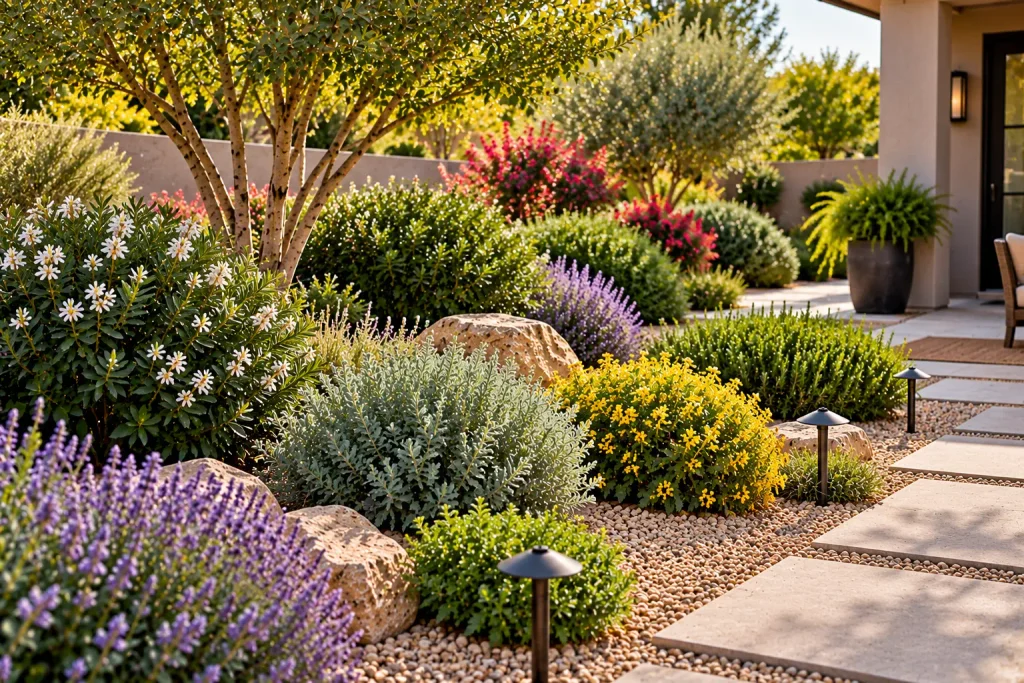
Shrubs provide structure, privacy, and year-round visual interest, but some varieties require frequent trimming to maintain their shape.
Choosing naturally compact or slow-growing shrubs can reduce that work considerably.
Look for varieties whose mature height and width fit the available space. A shrub that naturally grows to three feet tall is usually easier to maintain beneath a window than one that wants to reach eight feet.
Depending on your region, suitable choices may include compact junipers, dwarf yaupon holly, certain viburnums, or other locally adapted shrubs.
Planting fewer, well-chosen shrubs can create a more polished appearance than crowding a bed with varieties that quickly outgrow their space.
Best for: Foundation plantings, privacy borders, and structured backyard landscapes.
Maintenance tip: Check mature plant dimensions before purchasing. Selecting the correct size from the beginning is one of the best ways to avoid ongoing pruning.
12. Design a Backyard With Less Lawn
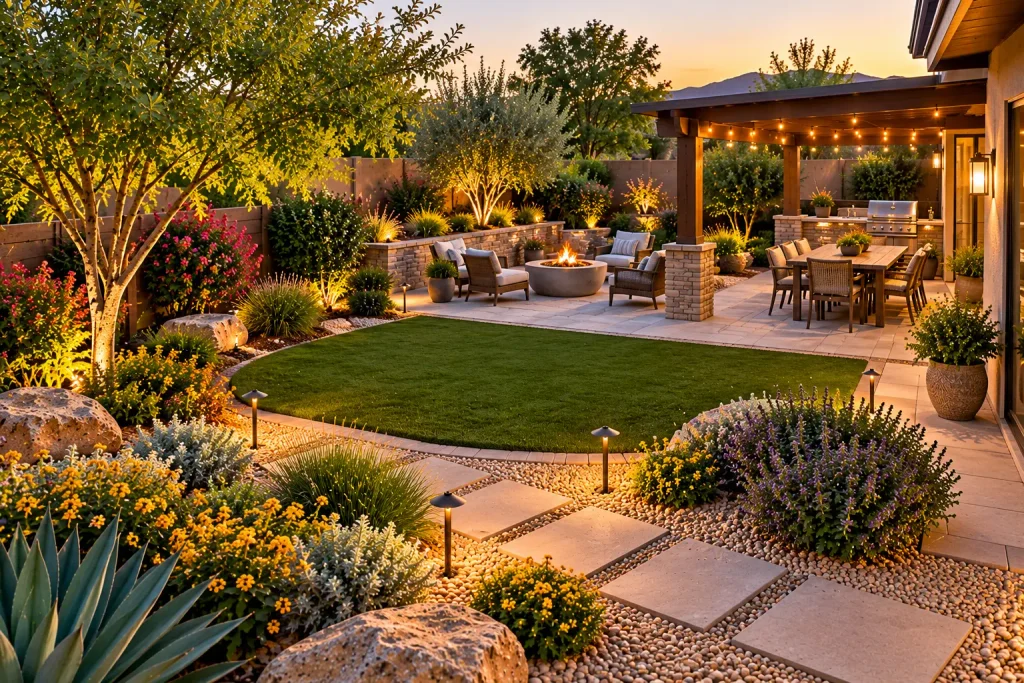
Sometimes the most effective low-maintenance landscaping strategy is simply reducing the amount of traditional grass in your backyard.
Instead of maintaining one large lawn, divide the space into functional areas.
You might combine a modest patch of grass with a patio, mulched garden beds, gravel pathways, and a small grouping of ornamental trees or shrubs.
This approach can make the backyard more interesting while reducing repetitive chores such as mowing, edging, and watering.
For families, keeping a manageable lawn area for play may make more sense than removing grass entirely.
Best for: Homeowners redesigning their backyard or looking to simplify an existing landscape.
Maintenance tip: Start by identifying areas of lawn you rarely use. Those are often the best places to introduce lower-maintenance alternatives.
If you’re working with a compact outdoor space, check out our 25 Small Backyard Ideas That Make the Most of Your Space for more ways to create a functional, beautiful backyard.
How to Plan a Low-Maintenance Backyard Landscape
Before purchasing plants or landscaping materials, spend a little time evaluating how your backyard actually functions.
Start with your climate. Plants that thrive with minimal attention in one region may struggle in another. Consider local rainfall, summer heat, winter temperatures, and soil conditions.
Study your sunlight. Observe which areas receive full sun, partial shade, or deep shade. Choosing plants for the right light conditions reduces problems later.
Think about how you use your yard. A family with children may want open lawn space, while someone who primarily entertains outdoors might prefer a larger patio and surrounding planting beds.
Plan for mature plant sizes. Crowded shrubs and trees often create unnecessary pruning and maintenance problems as they grow.
Consider water and drainage. Make sure patios, gravel beds, and other landscape changes don’t direct runoff toward your home or neighboring properties.
Keep the design simple. Repeating a limited selection of plants and materials often creates a more attractive, cohesive landscape that’s easier to care for.
Finally, remember that most newly installed landscapes require more attention during their first growing seasons. The long-term maintenance savings come after plants become established and the landscape begins functioning as intended.
Final Thoughts
A low-maintenance backyard doesn’t have to sacrifice beauty, greenery, or personality.
By replacing unnecessary lawn space, choosing plants suited to your climate, simplifying garden beds, and adding practical features such as edging and drip irrigation, you can create a landscape that looks attractive without demanding constant attention.
You don’t need to redesign your entire yard at once, either. Start with one area that requires too much work and make a few thoughtful changes.
The best low-maintenance landscape is one that fits your lifestyle—giving you more time to enjoy your backyard instead of constantly working on it.