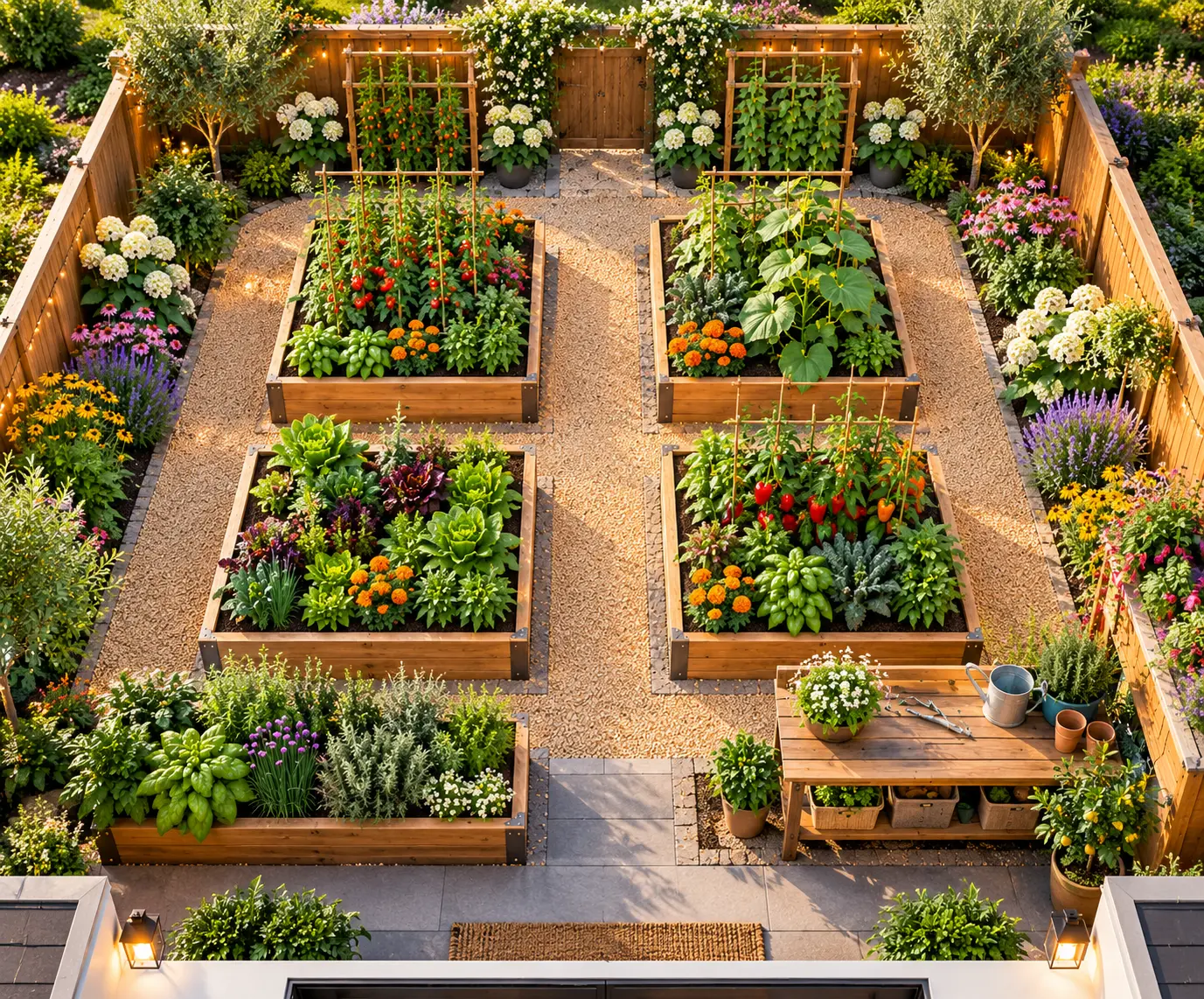
A 20×30 backyard garden design can transform just 600 square feet of outdoor space into a beautiful and productive vegetable and herb garden. With the right layout, even a relatively small backyard can provide room for raised vegetable beds, fresh culinary herbs, climbing plants, and comfortable pathways.
The key is designing the garden around how you’ll actually use it.
Instead of filling every available square foot with planting beds, this design creates an organized kitchen garden where vegetables are easy to reach, herbs are close to the house, and the entire space feels inviting rather than crowded.
For this complete backyard design, we’re using four raised vegetable beds, a dedicated herb-growing area, vertical trellises, a small potting station, and pollinator-friendly landscaping.
We’ll walk through the layout, explain the purpose of each feature, and explore how a compact backyard can become a practical growing space.
Table of Contents
The 20×30 Backyard Garden Layout at a Glance
Our backyard measures 20 feet wide and 30 feet deep, for a total of 600 square feet.
The house sits along the 20-foot side, with the garden extending toward the rear fence.
The design centers on four rectangular raised vegetable beds arranged in two rows, with a central pathway and access around the beds.
The main features include:
- Four 4×8-foot raised vegetable beds
- A central gravel or decomposed-granite walkway
- A dedicated herb garden near the house
- Vertical trellises for climbing vegetables
- A compact potting bench and tool-storage area
- Perimeter flowers and beneficial-insect habitat
- Attractive fencing and layered greenery
The raised beds provide 128 square feet of vegetable-growing space, with additional growing opportunities in the herb garden and along vertical supports.
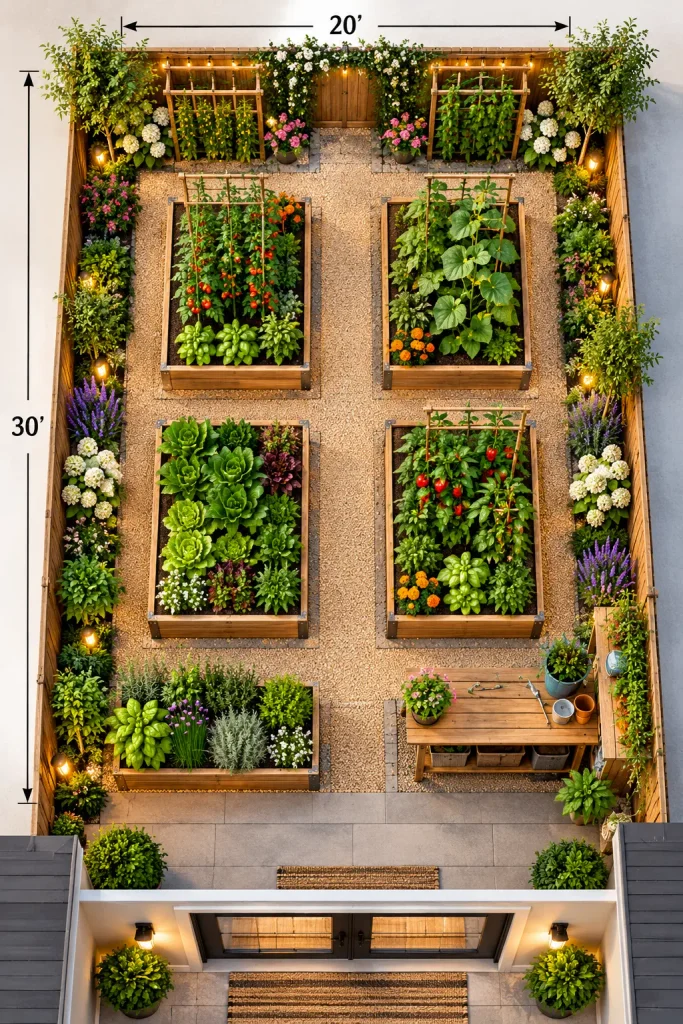
A Complete Look at the Backyard Vegetable Garden
From above, the garden has a structured, symmetrical appearance.
Four wooden raised beds create the main growing area, while light-colored gravel pathways provide access for watering, harvesting, and routine maintenance.
Trellises add vertical interest and allow climbing vegetables to grow upward rather than spreading across the ground.
Near the house, a dedicated herb garden makes it easy to collect fresh basil, parsley, thyme, or rosemary while cooking.
A compact potting station provides a place for planting seedlings, organizing supplies, and storing frequently used tools.
Flowering borders soften the edges of the garden and help attract pollinators and other beneficial insects.
The combination of natural wood, greenery, gravel, and flowers creates a backyard that feels both productive and beautiful.
1. Build Four Raised Vegetable Garden Beds
Raised beds are the foundation of this backyard garden design.
Each of the four proposed beds measures approximately 4 feet wide and 8 feet long.
A 4-foot width allows many gardeners to reach the middle from either side without stepping into the growing soil.
The 8-foot length provides enough room for several crops while keeping the beds manageable.
Cedar and other appropriately durable, garden-safe materials can be good choices for raised-bed construction.
The height of the beds can vary depending on your preferences, accessibility needs, budget, and soil conditions.
For this design, beds around 12 to 18 inches tall would create an attractive, organized appearance, although crops with deeper root systems may benefit from additional soil depth.
Design tip: Leave enough room between beds to kneel, carry watering cans, harvest vegetables, and move a wheelbarrow or garden cart. Wider paths may be necessary for accessible gardening.
For additional guidance on choosing materials, preparing soil, and building raised beds, see the University of Minnesota Extension’s guide to raised-bed gardening.
2. Organize Vegetables by Growing Needs
One of the advantages of having four separate raised beds is the ability to organize plants according to their growing requirements.
Rather than mixing everything randomly, each bed can serve a general purpose.
Bed One: Tomatoes and Companion Plants
Use the first bed for tomatoes supported by sturdy cages or trellises.
Depending on the tomato varieties and spacing requirements, you may also have room for smaller companion plants such as basil or flowers.
Choose tomato varieties suited to your climate and available growing season.
Bed Two: Peppers and Warm-Season Vegetables
A second bed can accommodate peppers, eggplants, or other warm-season crops.
These plants often appreciate sunny conditions and warm soil, although their performance depends on local temperatures and seasonal timing.
Bed Three: Leafy Greens and Quick-Growing Crops
Dedicate another bed to lettuce, spinach, kale, radishes, or other crops that can be harvested relatively quickly.
In warmer climates, leafy greens may perform better during cooler seasons or with appropriate afternoon shade.
Bed Four: Seasonal and Rotating Crops
Keep the fourth bed flexible.
It could grow carrots, beets, bush beans, or other seasonal vegetables depending on your preferences.
Rotating crop families and adjusting plantings from season to season can help you make better use of the space.
Gardening tip: These are examples, not a fixed planting schedule. Choose crops based on your local climate, sunlight, soil, and planting calendar.
3. Create a Dedicated Herb Garden Near the House
Fresh herbs are most useful when they’re easy to reach from the kitchen.
That’s why this 20×30 backyard garden design places the herb-growing area near the house instead of at the far end of the yard.
A narrow raised planter, several containers, or a small herb bed can provide room for commonly used culinary herbs.
Good options to consider include:
- Basil for pesto, sauces, and fresh salads
- Parsley for everyday cooking
- Thyme for roasted vegetables and savory dishes
- Oregano for Mediterranean-inspired meals
- Chives for soups, potatoes, and salads
- Rosemary for roasted meats and vegetables
- Mint for tea and refreshing drinks
Herbs have different requirements, so grouping them by watering and sunlight needs is important.
For example, rosemary and thyme generally prefer well-drained conditions, while basil typically needs more consistent moisture.
Mint is often best grown in its own container because it can spread aggressively.
Keeping the herb garden close to the house also makes it easier to harvest small amounts while preparing meals.
4. Use Vertical Trellises to Grow More Food
Vertical gardening is one of the most useful strategies for maximizing a small backyard.
Instead of allowing climbing vegetables to spread across pathways or neighboring plants, trellises encourage them to grow upward.
Depending on the season and climate, vertical supports may be used for:
- Pole beans
- Cucumbers
- Peas
- Selected small-fruited squash varieties
- Climbing flowering plants
Trellises can be attached to appropriately designed raised beds or installed as freestanding structures.
A simple wooden or metal arch can also create an attractive garden feature.
For the proposed layout, trellises near the rear portion of the garden provide vertical interest without dominating the entire space.
Consider how tall structures will cast shadows before choosing their positions.
Design tip: Position tall crops and trellises where they won’t unnecessarily shade vegetables that require full sun.
5. Make the Garden Easy to Navigate With Gravel Pathways
A productive vegetable garden needs more than planting space.
It also needs comfortable access for watering, weeding, harvesting, and transporting materials.
In this design, a central gravel pathway connects the house to the main growing area.
Smaller connecting paths provide access around the raised beds.
Gravel or decomposed granite can complement the natural wood beds and help define the garden’s organized layout.
However, these materials aren’t ideal for every gardener. Loose gravel can be difficult for wheelchairs, walkers, and some garden carts.
For easier mobility, consider a firm, stable, slip-resistant surface appropriate for the intended users.
Proper edging can help contain pathway materials and keep them separated from growing soil.
Before installing pathways, plan drainage and grading so water doesn’t collect near the house or garden structures.
6. Add a Compact Potting Bench and Tool Station
Even a small garden benefits from a dedicated workspace.
Rather than building a large shed, this design includes a compact potting bench near the house.
A narrow work surface can provide room for:
- Starting seedlings
- Repotting herbs and vegetables
- Organizing hand tools
- Storing plant labels and gloves
- Preparing small containers
- Keeping watering supplies nearby
A shelf underneath the bench can hold empty pots and other lightweight supplies.
If the bench is exposed to rain or strong sunlight, choose durable materials and consider a weather-resistant storage container for items that need protection.
Keeping the potting station compact preserves valuable growing space.
7. Include Flowers That Support Pollinators
A vegetable garden doesn’t have to be entirely vegetables.
Flowers can make the space more attractive while providing resources for pollinators and other beneficial insects.
In this design, narrow flowering borders run along portions of the fence and around selected garden edges.
Depending on your region, suitable options may include zinnias, calendula, cosmos, alyssum, and locally native flowering plants.
Choose varieties appropriate for your climate and avoid overcrowding the vegetable beds.
Flowering plants can support biodiversity, but their presence doesn’t guarantee pollination or prevent pests.
A diverse planting scheme, appropriate watering, and responsible pest management are all important parts of maintaining a healthy garden.
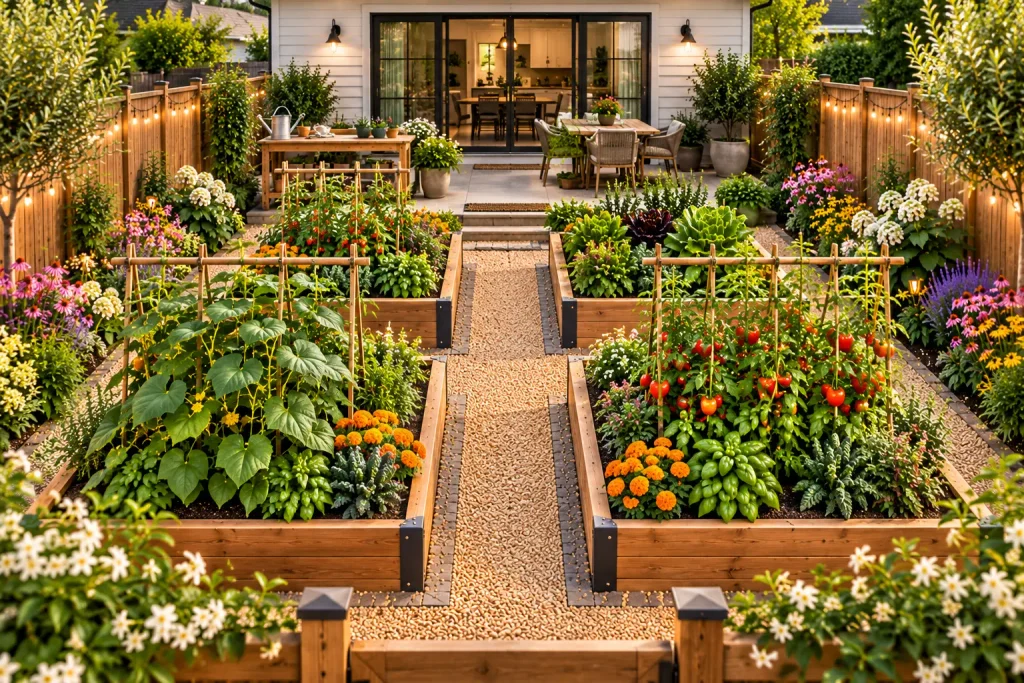
What Does the Garden Look Like From the House?
The view from the house is especially important in a small backyard.
Rather than seeing a collection of unrelated containers and planting beds, the homeowner looks out onto an organized kitchen garden.
The central pathway draws the eye toward the rear of the yard, while the raised beds create an orderly arrangement of vegetables and herbs.
Wooden trellises add height, and flowering borders introduce color around the edges.
The herb garden and potting station remain conveniently positioned near the house.
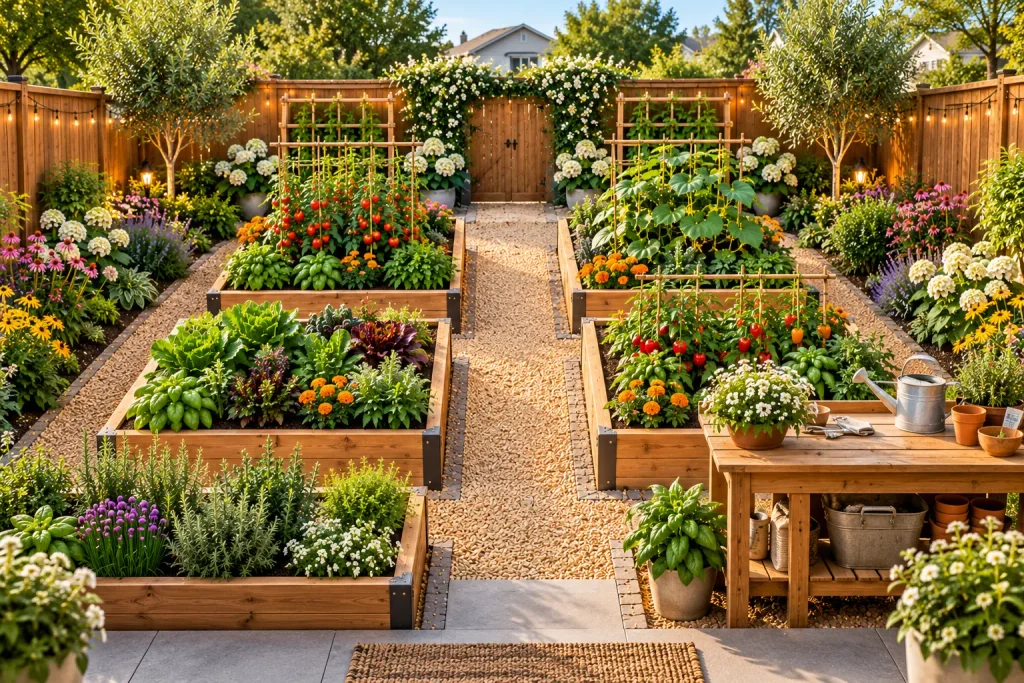
How the Backyard Garden Looks From the Rear Fence
Looking back toward the house provides another perspective on how the garden works.
From this viewpoint, the raised beds frame the central walkway, while the herb garden and potting station appear closer to the home.
The arrangement makes the garden feel intentional and organized.
It also provides a clear route through the space, making it easier to move between growing areas without stepping into the beds.
How Much Can You Grow in a 20×30 Backyard Garden?
A 20×30-foot backyard contains 600 square feet of total space.
With four 4×8-foot raised beds, this design provides 128 square feet of dedicated vegetable-growing area.
That represents a little over 21% of the backyard’s total footprint.
The remaining space accommodates pathways, herb planters, trellises, a potting station, landscaping, and necessary access.
| Garden feature | Approximate dimensions |
|---|---|
| Total backyard | 20 × 30 feet |
| Four vegetable beds | 4 × 8 feet each |
| Total raised-bed growing area | 128 square feet |
| Main pathway | Approximately 3 feet wide |
| Herb garden | Flexible planter or container area |
| Potting station | Approximately 3–4 feet wide |
| Trellises | Sized to the selected crops and beds |
The amount of food you can harvest will depend on crop selection, growing conditions, seasonal timing, plant spacing, and gardening practices.
Some vegetables can produce repeated harvests over several weeks, while others require more time and space for a single harvest.
Succession planting, seasonal crop changes, and vertical growing can help increase productivity without expanding the garden’s footprint.
These dimensions are conceptual planning guidelines. The final layout should be checked against actual site measurements, access needs, sun exposure, drainage, and other conditions.
How Much Sunlight Does a Vegetable Garden Need?
Sunlight is one of the most important factors in planning an edible garden.
Many fruiting vegetables, including tomatoes and peppers, perform best with at least six to eight hours of direct sunlight per day, although requirements vary by crop and climate.
Leafy greens and some herbs may tolerate less direct sunlight.
Before building raised beds, observe how sunlight moves across the backyard throughout the day.
Pay attention to shadows from the house, fences, trees, and neighboring structures.
In particularly hot climates, afternoon shade may benefit certain crops during the hottest months.
The most productive layout is not necessarily the most symmetrical one. If one side of the yard receives significantly more sunlight, the planting arrangement should reflect that.
Watering and Irrigation for a Small Backyard Garden
Raised beds can dry out more quickly than in-ground garden soil, especially during warm or windy weather.
A drip irrigation system or soaker hoses can help deliver water directly to the growing area.
For a garden with multiple raised beds, consider separate irrigation zones or adjustable emitters to accommodate plants with different watering needs.
Mulching the soil surface can help reduce evaporation and suppress weeds.
Check soil moisture rather than watering solely by a fixed calendar schedule.
Water requirements change with temperature, rainfall, soil composition, plant size, and growing season.
A convenient water source near the garden can also make routine maintenance easier.
How to Keep a Vegetable Garden Attractive Year-Round
One challenge with edible gardens is that they change throughout the seasons.
Some crops grow vigorously during their peak season, while other beds may be temporarily empty.
A few design choices can keep the backyard attractive throughout the year.
Use matching raised beds. Consistent materials and dimensions give the garden structure even when plants aren’t growing.
Maintain clear pathways. Defined walkways keep the space looking organized.
Add perennial herbs where appropriate. Certain herbs can provide greenery across multiple seasons in suitable climates.
Include flowering borders. A mixture of seasonal flowers and perennial plants can add color around the vegetable beds.
Plan for seasonal transitions. Cover crops, mulch, or neatly maintained beds can keep the garden tidy between plantings.
Keep tools organized. A compact storage area prevents gardening supplies from taking over the pathways.
The goal is to create a backyard that feels like a designed landscape as well as a place to grow food.
Is a 20×30 Backyard Big Enough for a Vegetable Garden?
Absolutely. A 20×30 backyard can accommodate a meaningful vegetable and herb garden when the space is organized carefully.
Four raised beds offer enough room to experiment with a variety of crops, while herb planters and vertical supports provide additional growing opportunities.
The design is especially suitable for homeowners who want fresh ingredients, an enjoyable outdoor hobby, and an attractive backyard without dedicating a large property to gardening.
If your priority is relaxing or entertaining rather than growing food, explore our 30×40 backyard design without a pool for a different approach to outdoor living.
You can also find inspiration in our small backyard ideas and low-maintenance landscaping ideas.
Final Thoughts
A thoughtful 20×30 backyard garden design proves that you don’t need a large property to grow vegetables and herbs.
With four raised beds, a dedicated herb garden, vertical trellises, comfortable pathways, and a compact potting station, this 600-square-foot backyard becomes a productive and inviting outdoor space.
The most important design decisions are keeping plants accessible, choosing crops suited to your climate, and leaving enough room to maintain the garden comfortably.
Whether you’re growing tomatoes for summer meals, fresh herbs for cooking, or leafy greens during cooler months, a well-organized kitchen garden can make a small backyard feel incredibly rewarding.
This backyard garden is a conceptual design intended for inspiration and preliminary space planning. Actual dimensions, growing conditions, irrigation, drainage, materials, and accessibility requirements should be verified for your property before installation.