You don’t need acres of land to create a productive backyard. With a thoughtful layout, a typical 30×40-foot suburban yard can provide space for growing vegetables, raising a small flock of chickens, collecting rainwater, composting organic waste, and storing the tools needed to keep everything running.
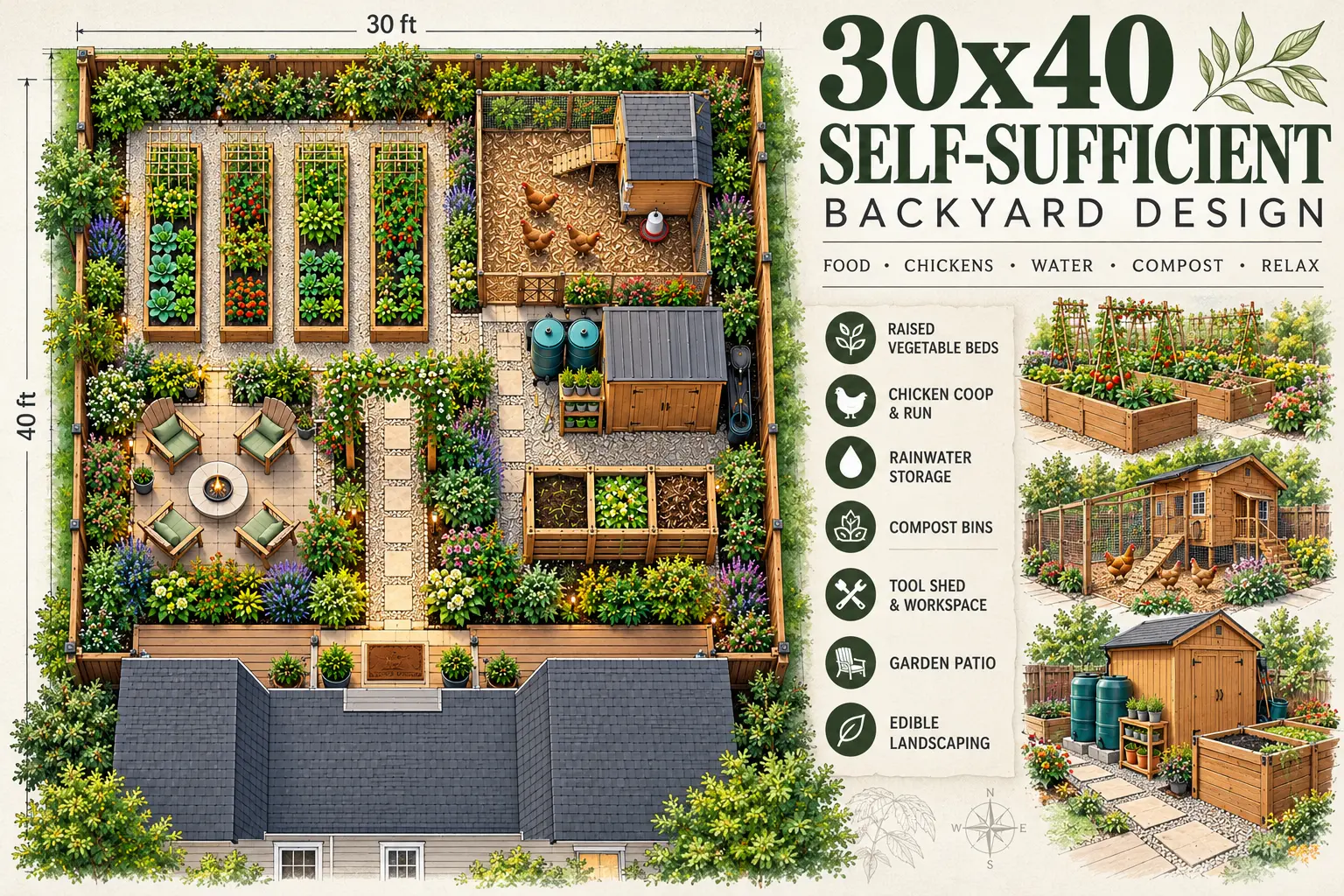
This 30×40 self-sufficient backyard design shows how to organize 1,200 square feet into practical, connected spaces without sacrificing the beauty and enjoyment of your outdoor area.
The goal isn’t complete independence from grocery stores or utilities. It’s to make your backyard more productive, resource-efficient, and useful throughout the year.
Table of Contents
30×40 Self-Sufficient Backyard Design: Complete Layout
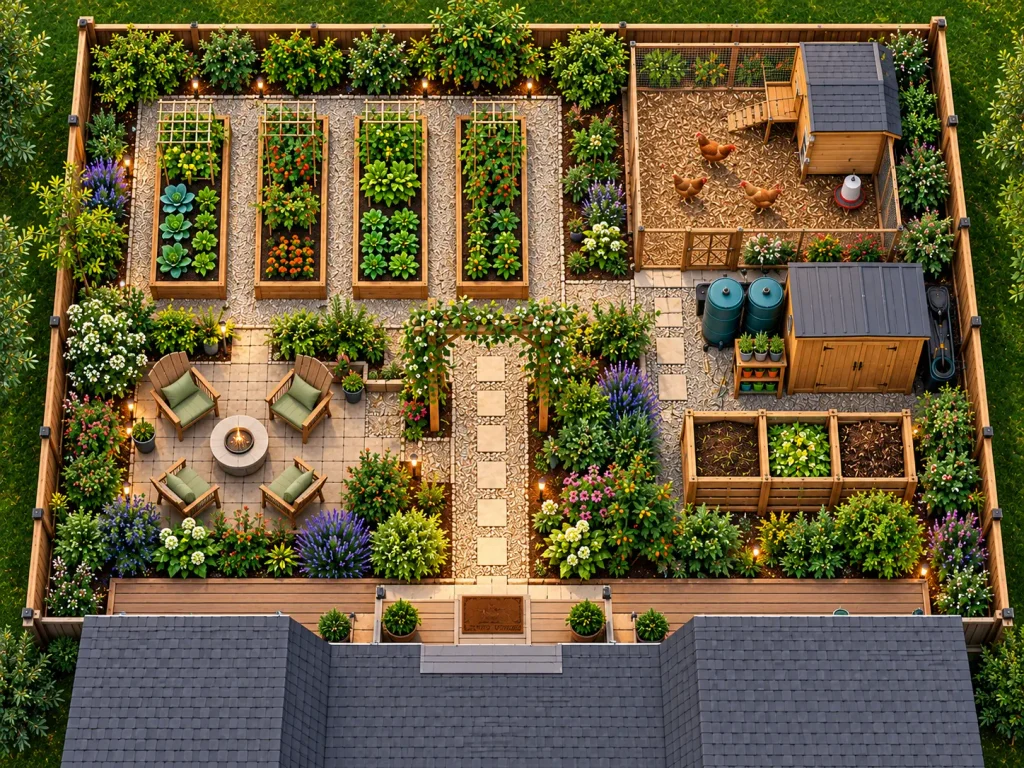
Our design divides the backyard into seven connected areas:
- A raised-bed vegetable garden
- A small patio integrated into the growing space
- Edible landscaping with herbs, berries, and compact fruit plants
- A secure chicken coop and enclosed run
- Tool storage and rainwater collection
- A composting system
- Accessible paths and flexible working space
The house sits along the 40-foot side of the property, with the yard extending 30 feet toward the rear fence.
The layout concentrates food production in one area, keeps chickens separated from vegetable beds, and places essential tools and supplies within easy reach.
If you’re comparing different ways to use a backyard of this size, our 30×40 backyard design without a pool offers another approach that prioritizes outdoor living and landscaping.
1. Grow More Food With a Raised-Bed Vegetable Garden
The vegetable garden is the centerpiece of this design.
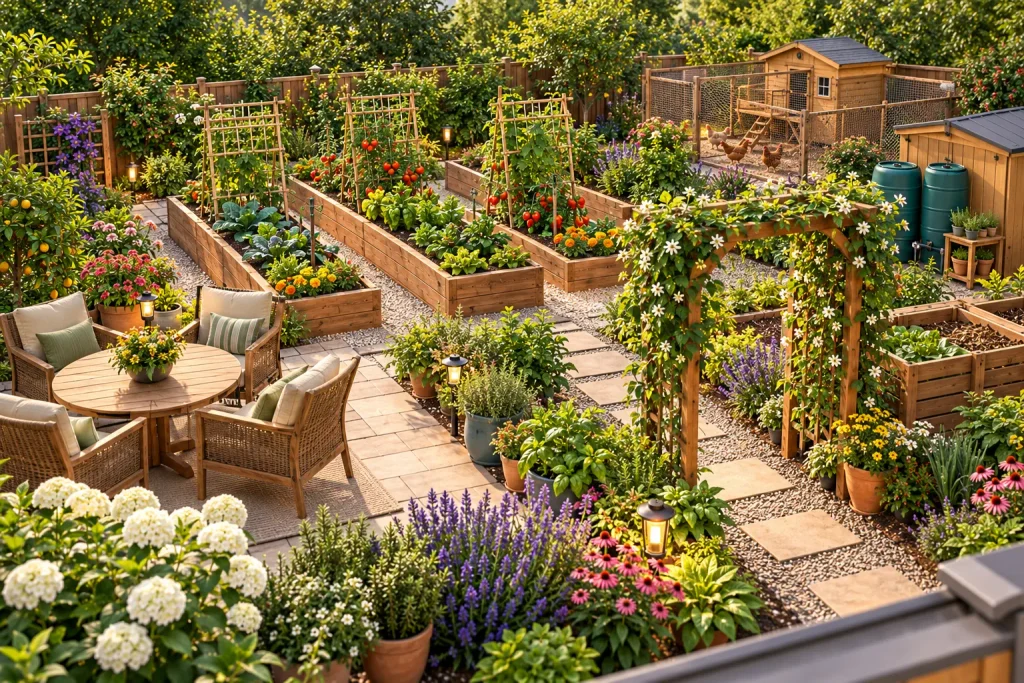
Four raised beds, approximately 3×8 feet each, provide a combined 96 square feet of growing surface. Their narrow width allows gardeners to reach the center without stepping on the soil.
For another space-efficient growing layout, explore our 20×30 backyard garden design, which focuses on vegetables, herbs, and raised beds in a smaller footprint.
Use the beds for a rotating mix of vegetables suited to your climate, such as tomatoes, peppers, lettuce, carrots, beans, and leafy greens.
Vertical trellises can support climbing crops, helping increase production without expanding the garden’s footprint.
For best results:
- Position the beds where they receive adequate sunlight for the selected crops.
- Leave comfortable paths between beds for watering, harvesting, and maintenance.
- Install drip irrigation or soaker hoses to reduce water waste.
- Use mulch to conserve moisture and moderate soil temperatures.
- Rotate compatible crops and replenish soil nutrients between growing seasons.
In hot climates, temporary shade cloth may help protect sensitive crops during extreme summer heat.
Image placement: Ground-level perspective of the four raised beds, trellises, and surrounding paths.
2. Integrate a Small Patio Into the Garden
A productive backyard should still be somewhere you enjoy spending time.
Instead of dedicating a large section of the property to entertainment, this design includes a compact patio of approximately 8×10 feet alongside the vegetable garden.
The patio can serve several purposes: a place for morning coffee, a spot to relax after gardening, a convenient surface for sorting harvested vegetables, or an outdoor workspace for seed starting and potting.
A small table, a few chairs, and surrounding edible plants make the space inviting without requiring an elaborate outdoor kitchen or large paved area.
Choose permeable paving where practical, and avoid locating the patio where it would shade important growing areas.
For more seating arrangements and paving inspiration, browse our patio ideas for outdoor living spaces and adapt your favorite features to a productive garden.
3. Add Edible Landscaping Around the Edges
Not every food-producing plant needs a dedicated vegetable bed.
The borders of a suburban backyard can accommodate herbs, berry bushes, perennial vegetables, and carefully selected compact fruit trees.
Depending on climate and growing conditions, consider:
- Blueberries, raspberries, blackberries, or strawberries
- Rosemary, thyme, oregano, sage, and chives
- Dwarf or espalier-trained fruit trees
- Pollinator-friendly flowers that support beneficial insects
Choose plants based on their mature size, root requirements, sunlight needs, and suitability for your region.
For a backyard this size, one carefully positioned compact fruit tree may be more practical than several trees that eventually shade the vegetable garden.
Edible borders also help soften fences and utility areas, making the backyard feel more like an intentional landscape.
4. Raise Chickens in a Secure Coop and Run
Chickens add another productive element to the backyard by providing eggs and manure that can be composted properly.
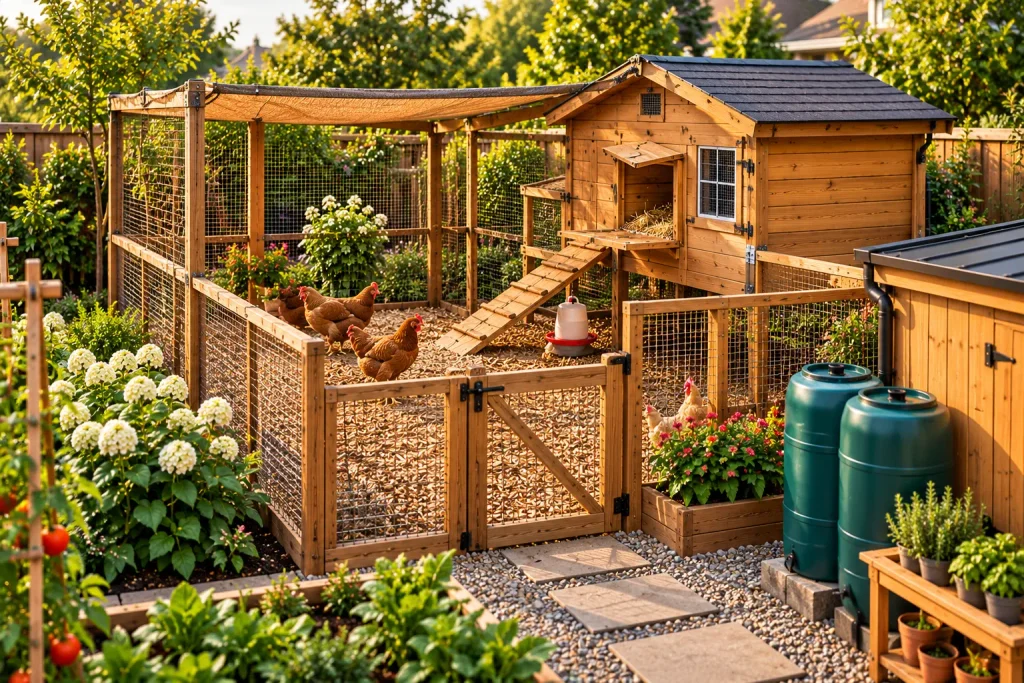
Our design includes a small coop of approximately 4×6 feet and an enclosed run of approximately 8×12 feet, intended as a starting concept for a flock of three hens.
A secure run is especially useful in a small suburban yard because it protects vegetable beds from scratching and reduces the risk of chickens escaping into neighboring properties.
A successful chicken area should include adequate ventilation, dry bedding, roosting space, nest boxes, shade, clean water, and secure protection against predators.
Keeping backyard chickens healthy also requires good biosecurity practices. The University of Minnesota Extension provides guidance on protecting backyard poultry from disease, including keeping wild birds away from feed and water, cleaning equipment, and limiting contact with unfamiliar birds.
The enclosure should also be accessible for feeding, egg collection, and regular cleaning.
Before adding chickens: Check city ordinances, HOA covenants, flock-size limits, coop setbacks, nuisance rules, and any applicable permits. Some communities prohibit backyard poultry entirely.
Coop and run dimensions should be checked against the needs of the chosen breed and local animal-welfare guidance before construction.
5. Collect and Store Water for the Garden
Water conservation is an important part of a productive backyard.
A pair of rain barrels or a compact storage tank can provide supplemental irrigation water, particularly during rainy periods.
The backyard design reserves a utility area for water storage near the tool shed and garden.
Don’t Overlook Your Home’s Gutters
Your house may offer a much larger rainwater collection surface than any backyard structure.
With a properly designed gutter and downspout system, roof runoff can be directed into rain barrels or a larger storage tank.
For perspective, one inch of rain falling on 1,000 square feet of roof produces approximately 623 gallons of water before collection losses.
Actual collection depends on roof area, rainfall, system efficiency, and available storage.
Collected rainwater may contain contaminants from roofing materials, debris, and animal droppings. It should not be assumed potable, and its suitability for edible-crop irrigation depends on the system and application method.
Use screened inlets, covered containers, mosquito protection, and an overflow route that directs excess water away from the home’s foundation.
Check applicable rainwater harvesting rules, plumbing requirements, and HOA restrictions before installing a system.
For additional guidance, the EPA’s rainwater harvesting resources explain how rain barrels and cisterns can capture roof runoff for landscape irrigation and other outdoor uses. Homeowners should also check local regulations before installing a collection system.
6. Turn Garden Waste Into Compost
A compact composting area helps recycle appropriate organic material into a useful soil amendment.
The design includes a small composting station near the utility area, separated from the main patio and positioned for convenient garden access.
A two- or three-bin arrangement can provide space for adding materials, allowing compost to mature, and storing finished compost.
Common compost ingredients include fallen leaves, untreated plant trimmings, and suitable fruit and vegetable scraps.
Balance moisture and airflow, and avoid adding materials that attract pests or create unpleasant odors.
What About Chicken Manure?
Chicken manure can contribute nutrients to compost, but fresh manure can contain pathogens and should not be applied directly to vegetables.
Follow appropriate composting and curing guidance, especially when the finished material will be used around food crops. A dedicated manure-management process may be necessary.
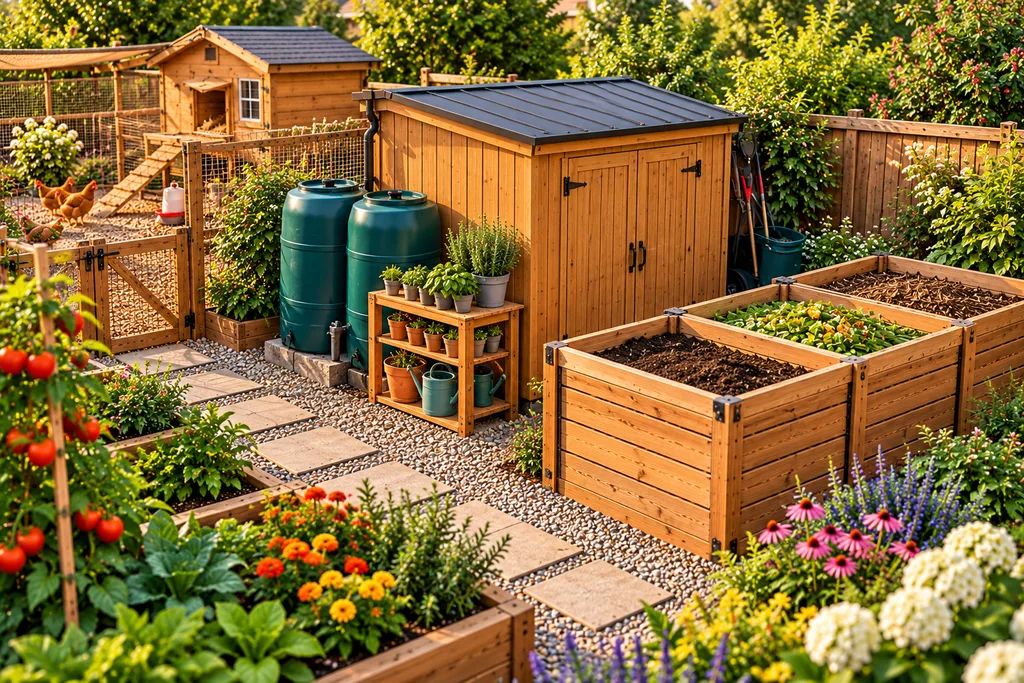
7. Include Practical Storage and a Small Energy System
A self-sufficient backyard requires tools and equipment, but they shouldn’t dominate the landscape.
A compact weatherproof shed or storage cabinet can hold hand tools, hoses, irrigation supplies, seed trays, gloves, and other essentials.
Position frequently used equipment close to the garden and maintain a clear access route for carrying supplies and moving a wheelbarrow.
A small solar-powered system may also be useful for selected applications, such as low-voltage lighting or compatible irrigation equipment.
However, a portable solar panel or small battery system should not be confused with whole-home energy independence.
Select equipment according to actual power requirements, weather exposure, electrical safety standards, and manufacturer instructions. Permanent electrical installations may require permits and professional installation.
How Much Space Does Everything Need?
The following dimensions are planning targets for the proposed layout, not a surveyed or construction-ready plan.
| Feature | Approximate dimensions |
|---|---|
| Four raised vegetable beds | 3×8 ft each |
| Chicken coop | 4×6 ft |
| Enclosed chicken run | 8×12 ft |
| Garden patio | 8×10 ft |
| Tool shed or storage | Approximately 4×6 ft |
| Composting station | Compact two- or three-bin arrangement |
| Rainwater storage | Two barrels or a compact tank |
| Remaining space | Paths, edible borders, planting areas, and access |
The final placement must account for paths, maintenance clearances, local setbacks, existing utilities, and the mature sizes of plants.
A 30×40 backyard will not accommodate every feature equally well in every climate or property configuration. The layout may need to be mirrored, simplified, or adjusted to protect sunlight and drainage.
Build Your Self-Sufficient Backyard in Phases
You don’t need to install everything at once.
Phase 1: Establish the Garden
Start with the raised beds, suitable soil, irrigation, and access paths. Learn which crops perform best in your location before expanding.
Phase 2: Add Composting and Edible Landscaping
Introduce compost bins, herbs, berries, and perennial food plants. These additions help create a more connected growing system.
Phase 3: Improve Water Storage and Equipment Access
Install appropriate rainwater storage and organize your tools. Evaluate the actual water savings and maintenance requirements.
Phase 4: Add the Chicken Enclosure
After confirming local permissions and preparing for ongoing animal care, construct the coop and secure run before bringing hens home.
Phase 5: Consider Small-Scale Solar Equipment
Add solar-powered features only where they provide a practical benefit and can be operated safely.
Before You Build: HOA Rules, City Ordinances & Site Conditions
Self-sufficient backyard projects often involve more restrictions than conventional landscaping.
Before purchasing materials or animals, verify:
- HOA rules: Restrictions on chickens, sheds, fencing, water tanks, solar equipment, and visible structures.
- Local ordinances: Animal limits, setbacks, accessory-building permits, and sanitation requirements.
- Utilities: Underground lines and safe locations for digging or installing foundations.
- Drainage: Rainwater overflow, neighboring properties, and existing drainage patterns.
- Sunlight: Seasonal shade from the house, fences, and surrounding trees.
- Climate: Appropriate crops, water needs, heat protection, and winter conditions.
- Maintenance: Daily animal care, irrigation, compost management, cleaning, and seasonal garden work.
Call 811 or use your local utility-location service before excavation, and verify any additional private utilities that may not be marked.
Can a 30×40 Backyard Really Make You Self-Sufficient?
A 1,200-square-foot backyard is unlikely to provide all the food, water, and energy needed by a household.
But it can still make a meaningful contribution.
A productive garden can supply seasonal vegetables and herbs. A small flock of hens can provide eggs. Composting can reduce some organic waste, and water-efficient irrigation can help conserve resources.
Perhaps most importantly, these projects help homeowners develop practical skills in growing food, maintaining equipment, and managing resources.
The best self-sufficient backyard isn’t necessarily the one with the most features. It’s the one whose systems work together and remain manageable over time.
Final Thoughts
This 30×40 self-sufficient backyard design demonstrates how a typical suburban property can combine a productive vegetable garden, chickens, edible landscaping, rainwater storage, composting, and practical storage without completely giving up outdoor living space.
Start with the systems that fit your property, budget, and lifestyle. Build gradually, check local restrictions, and adapt the layout to your climate.
Even a modest backyard can become a more productive and rewarding part of your home.