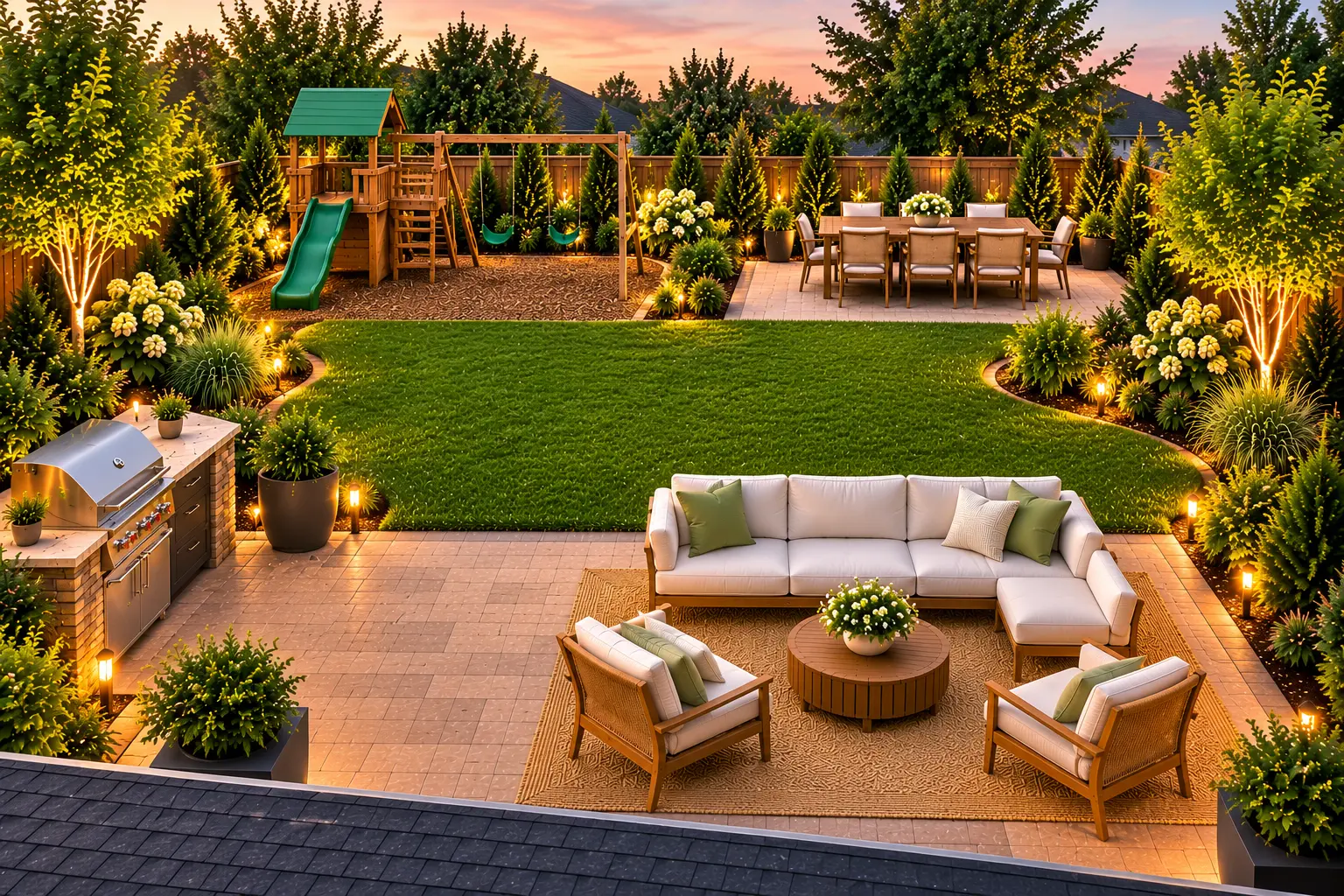
A family-friendly backyard should offer more than just a place for children to play. Ideally, it should give everyone in the household somewhere to relax, gather, and enjoy time outdoors.
But when your backyard measures just 25 feet wide by 35 feet deep, fitting a dining patio, lawn, children’s play area, and attractive landscaping into the same space requires thoughtful planning.
This family-friendly backyard design shows how an 875-square-foot yard can accommodate all of those features without feeling overcrowded.
We’ll walk through the complete layout, explain how each area works, and explore practical ways to create a backyard that can grow with your family.
Table of Contents
The 25×35 Family-Friendly Backyard Layout at a Glance
The backyard measures 25 feet wide and 35 feet deep, giving us approximately 875 square feet of outdoor space.
Rather than dividing the yard into several small, disconnected sections, this design uses three main areas:
- Patio near the house: A comfortable outdoor dining and seating area where adults can relax while keeping an eye on the yard.
- Open central lawn: Flexible space for games, everyday play, and family activities.
- Dedicated children’s play corner: A compact playhouse and sandbox surrounded by soft landscaping.
Flowering shrubs, ornamental grasses, and a few carefully positioned small trees soften the perimeter without taking over the usable yard.
The rear-left corner includes an approximately 12-by-14-foot children’s play area with a small wooden playhouse and sandbox. Its gently curved border creates a natural transition to the open lawn without making the yard feel divided into rigid sections.
The overall goal is to keep the center open and place larger features toward the edges.
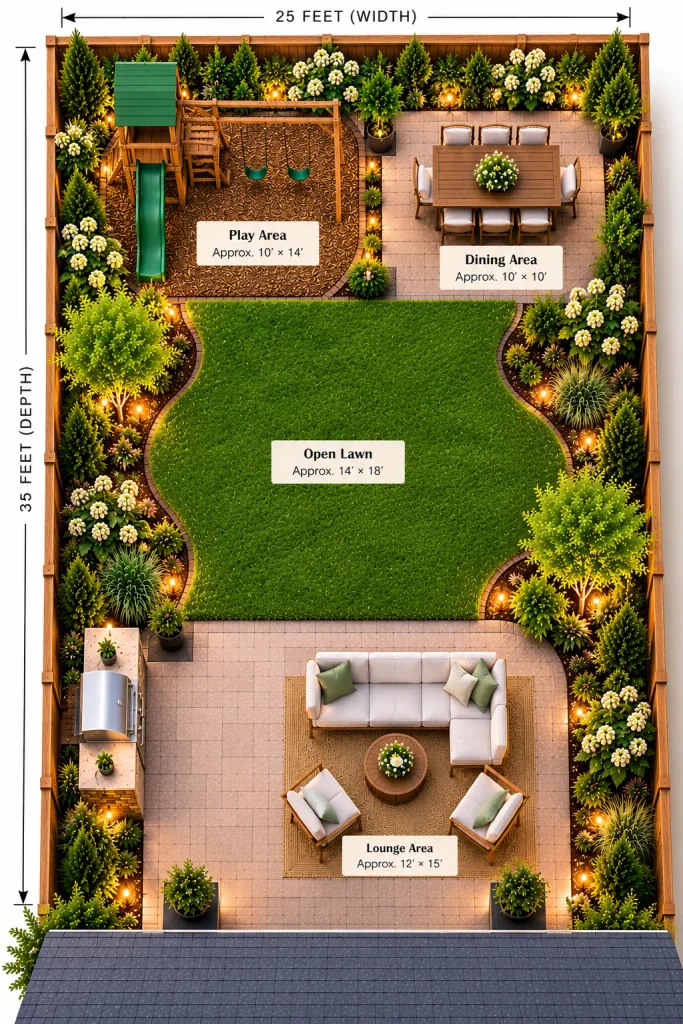
A Complete Look at the Family-Friendly Backyard Design
From above, the layout feels organized but not overly formal.
The house opens directly onto a paver patio furnished with a six-seat outdoor dining table and a compact conversation area. Beyond the patio, a rectangular lawn provides the primary open space.
A small wooden playhouse and sandbox occupy the rear-left corner, with low planting beds separating the play area from the surrounding fence.
The right side remains relatively open, allowing children to move freely across the lawn.
Warm landscape lighting, natural wood finishes, and layered greenery help the backyard feel welcoming for adults as well as children.
1. Create a Comfortable Family Patio Near the House
The patio is the natural gathering place in this design.
Positioning it directly outside the house makes it easy to carry meals outdoors, supervise children, and move between indoor and outdoor activities.
A patio approximately 12 feet deep provides a useful starting point for planning, although the final furniture arrangement should be checked carefully for comfortable walking clearances.
Choose Furniture That Works for Everyday Family Life
A six-seat dining table provides room for family meals and visiting friends.
Choose durable outdoor furniture with washable cushions and rounded or softened edges where practical.
In this design, the dining table sits on the left side of the patio, while a sofa and two lounge chairs create a separate conversation area on the right. The BBQ grill is positioned along the far-right perimeter, away from the seating arrangement. Before installing the grill, verify the manufacturer’s required clearances from furniture, fencing, and other combustible materials.
Keep the Patio Connected to the Lawn
Avoid placing tall planters, walls, or large furniture directly between the patio and the lawn.
An open transition improves visibility and makes it easier for adults to supervise children playing nearby.
For more ideas about furniture arrangements and outdoor dining spaces, explore our patio ideas for creating a welcoming backyard retreat.
2. Preserve an Open Lawn for Games and Everyday Play
An open lawn is one of the most versatile features in a family backyard.
It can accommodate activities that change from day to day, including:
- Playing catch or kicking a ball
- Setting up temporary outdoor games
- Running and imaginative play
- Picnics and outdoor blankets
- Seasonal activities and family gatherings
Instead of filling the center with permanent structures, keep it flexible.
Why a Simple Rectangular Lawn Works
A rectangular lawn is easy to understand visually and provides a continuous area for movement.
It also makes the backyard feel larger because the eye can travel from the patio toward the rear fence without encountering several obstacles.
For households that prefer less mowing, a durable, climate-appropriate lawn alternative may be worth considering.
3. Add a Dedicated Kids’ Play Area Without Taking Over the Yard
The rear-left corner contains a small wooden playhouse and a compact sandbox.
This arrangement gives children a recognizable space of their own while preserving the larger lawn for shared activities.
Keep Play Equipment Appropriately Sized
A small playhouse can encourage imaginative play without requiring the footprint of a large play structure.
A covered sandbox offers another activity for younger children, and its cover helps keep out debris when the sandbox is not in use.
Avoid placing play equipment directly against a fence or beneath hazardous branches.
Follow the equipment manufacturer’s installation instructions and required clearances. Where applicable, use appropriate protective surfacing around equipment.
Before installing backyard play equipment, review the U.S. Consumer Product Safety Commission’s home playground safety guidance for recommendations on equipment placement, protective surfacing, maintenance, and safe play areas.
Design for Easy Supervision
The play corner should remain visible from the main patio.
Avoid tall shrubs or solid decorative screens between the dining area and children’s play space.
Good visibility helps the backyard function as one connected family area rather than several isolated zones.
4. Use Landscaping to Create Privacy Without Losing Play Space
Landscaping can make a family backyard feel peaceful and attractive, but dense planting can quickly reduce the amount of usable space.
This design concentrates planting along the perimeter.
White and soft pink flowering shrubs add color, while ornamental grasses and narrow evergreen plants provide texture and privacy.
Choose Plants With Children in Mind
Before planting, check whether a species is toxic, thorny, irritating, or otherwise unsuitable for areas where children regularly play.
Select plants suited to your local climate and available sunlight.
Avoid placing delicate plants where balls, running feet, and everyday activities are likely to damage them.
For additional inspiration, see our low-maintenance landscaping ideas for attractive backyard planting with less ongoing work.
Use Small Trees Carefully
A small ornamental tree can provide shade and visual interest without dominating the backyard.
However, tree placement should account for mature canopy size, roots, overhead utilities, and proximity to fences and patios.
In a compact family yard, one well-positioned tree may be more useful than several crowded together.
5. Make the Backyard Comfortable for Adults, Too
A successful family-friendly backyard should be enjoyable even when children aren’t actively playing.
The patio provides a place for coffee in the morning, outdoor meals, and evening conversations.
A few thoughtful details can make the entire space feel more polished.
Add Warm, Subtle Lighting
Low-voltage landscape lighting can illuminate planting beds and help define the patio.
Choose outdoor-rated fixtures and avoid exposed cords or poorly positioned lights in active play areas.
Keep Storage Practical
Outdoor toys, cushions, and small play accessories can quickly create clutter.
A weather-resistant storage bench or compact storage box near the patio makes cleanup easier.
Choose storage products with appropriate child-safety features and avoid designs that could create entrapment hazards.
Leave Room for Change
Children’s interests evolve.
A playhouse or sandbox may be ideal for younger children, while older children may prefer sports, lawn games, or a larger gathering space.
Keeping the central lawn open allows the backyard to adapt over time.
For additional ways to use compact outdoor areas efficiently, browse our small backyard ideas.
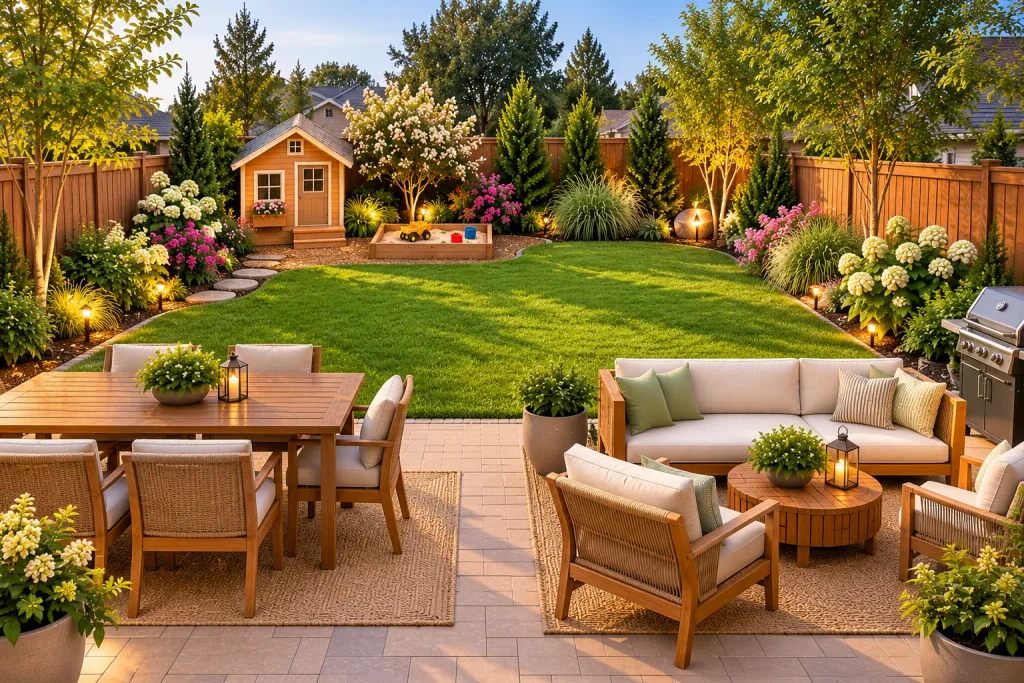
What Does the Backyard Look Like From the Patio?
From the patio, the backyard feels open and inviting.
The dining table and seating area occupy the foreground, while the central lawn stretches toward the rear fence.
The playhouse sits off to the left, surrounded by flowering plants and low greenery.
Because the play corner is positioned toward the perimeter, it doesn’t interrupt the view across the lawn.
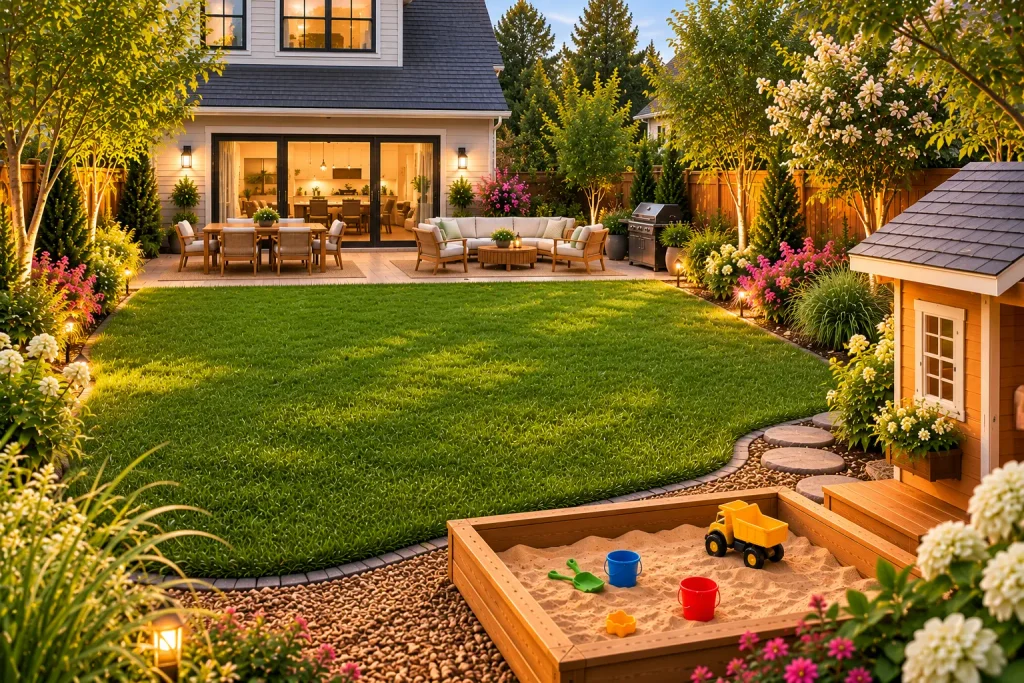
How the Backyard Looks From the Play Area
Looking back toward the house reveals another advantage of the layout.
The lawn creates a clear connection between the play area and the patio, making it easy to see how the entire backyard functions as a shared family space.
The dining area remains visible, while perimeter planting softens the fence lines without blocking sightlines.
Is a 25×35 Backyard Big Enough for a Patio and Play Area?
Yes. A 25×35 backyard provides 875 square feet, which can accommodate a patio, an open lawn, and a compact play area when features are carefully selected.
The key is avoiding oversized equipment and furniture.
A large swing set, outdoor kitchen, trampoline, and expansive dining area may not all fit comfortably together.
Instead, prioritize the features your household will use most often.
A compact playhouse, appropriately sized dining furniture, and an open lawn provide a practical balance for many families.
What Should You Avoid in a Family-Friendly Backyard?
Several common design decisions can make a modest backyard less useful:
- Oversized play structures: They can consume most of the open lawn and require additional safety clearances.
- Too many separate zones: Small, disconnected spaces can make the backyard feel crowded.
- Poor sightlines: Tall planting or structures may make it difficult to supervise children.
- Unsafe plant choices: Some ornamental plants are unsuitable near active play areas.
- Cluttered pathways: Toys, furniture, and decorative objects can create tripping hazards.
- Insufficient shade: Patios and play areas can become uncomfortable in hot weather.
Before construction, confirm drainage, property boundaries, easements, utility locations, local requirements, and any necessary permits.
The dimensions in this article are conceptual planning estimates, not a construction-ready site plan.
How Much Does a 25×35 Family Backyard Makeover Cost?
The cost of a family-friendly backyard makeover depends on materials, site preparation, labor, drainage, landscaping, and the play equipment selected.
A simple project might reuse an existing patio and focus on planting, lawn improvements, and a small playhouse.
A more extensive renovation could include new pavers, irrigation, lighting, fencing, and professional landscape installation.
To keep spending under control, prioritize the elements that will make the biggest difference to daily use.
For many families, those are a functional patio, a durable open play surface, and a modest dedicated play area.
Consider completing the project in stages rather than installing every feature at once.
Final Thoughts
A well-planned family-friendly backyard doesn’t need to be enormous.
This 25×35 backyard design demonstrates how a comfortable dining patio, flexible central lawn, and dedicated children’s play corner can work together in just 875 square feet.
By keeping the middle open, concentrating landscaping around the edges, and choosing appropriately sized features, the yard remains practical without sacrificing its appearance.
Most importantly, the design creates a place where children can play, adults can relax, and the whole family can enjoy spending time together outdoors.